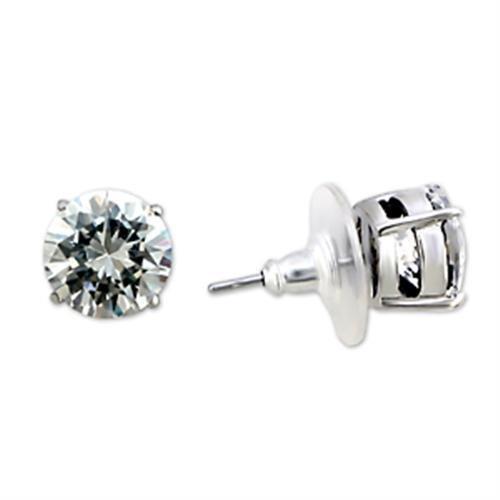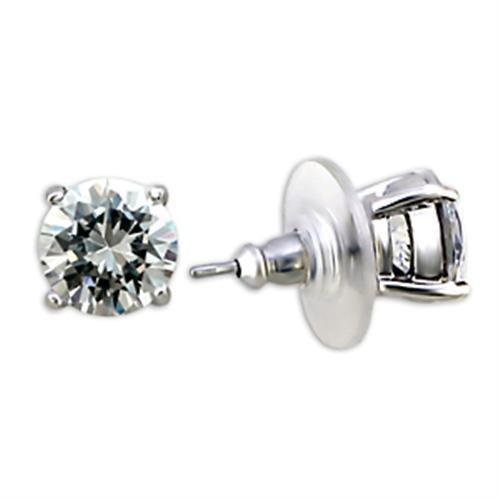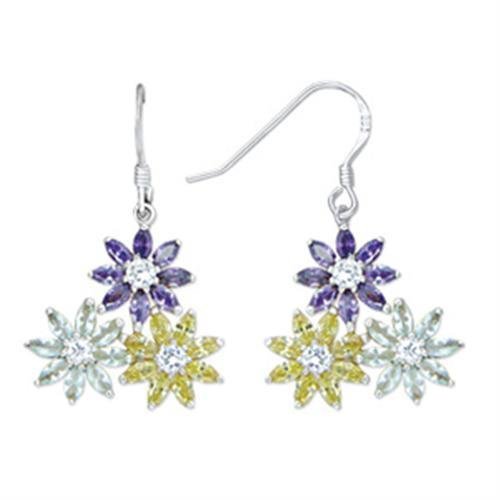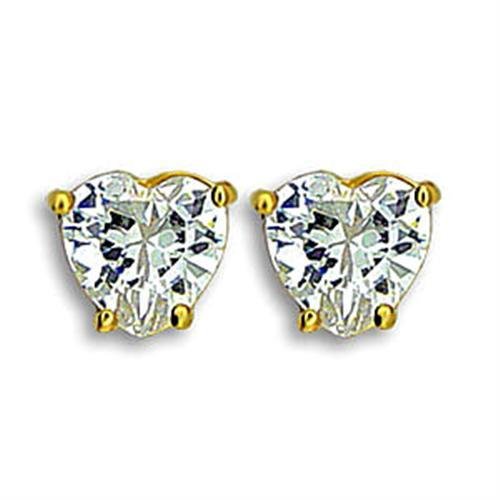

Cubic zirconia—usually shortened to CZ—is a laboratory-created crystalline material made primarily from zirconium dioxide (ZrO2). It is widely used in jewellery because it can be cut into beautifully precise facets, offers impressive brilliance and fire, and creates the appearance of a clear, sparkling gemstone without the price associated with a natural diamond.
The essentials at a glance:
- Cubic zirconia is a man-made stone, rather than a naturally mined diamond.
- Its chemical basis is zirconium dioxide, also known as zirconium oxide.
- CZ is a diamond simulant: it can resemble a diamond, but it is not chemically or physically the same material.
- It is not the same as a lab-grown diamond, which has essentially the same chemical composition and crystal structure as a mined diamond.
- Cubic zirconia is known for its clarity, brilliance, fire and affordability.
- It is durable enough for many types of jewellery, although its hardness and scratch resistance are lower than diamond.
- CZ can be fashioned into many familiar gemstone shapes and settings, making it particularly versatile for rings, earrings, necklaces and bracelets.
- With appropriate care, cubic zirconia jewellery can retain its bright, polished appearance for years.
So, is cubic zirconia "real"? Yes—as a manufactured crystalline material in its own right. Is it a diamond? No. And that distinction is precisely where understanding CZ becomes interesting.
What Is Cubic Zirconia?
If you've ever spotted a remarkably bright stone in a piece of jewellery and wondered how it achieves so much sparkle at an accessible price, there's a good chance you've encountered cubic zirconia.
Cubic zirconia is a synthetic crystalline form of zirconium dioxide. The name refers to its cubic crystal structure, while "zirconia" comes from zirconium dioxide, the material from which the crystal is produced.
You'll commonly see it abbreviated to CZ.
Unlike gemstones that are mined from the earth, cubic zirconia is manufactured under controlled conditions. Terms such as synthetic gemstone, laboratory-created gemstone, lab-created gemstone and man-made stone are consequently often associated with CZ.
That doesn't mean the material is imaginary, plastic or simply "fake glass."
Cubic zirconia is a real manufactured crystalline material. It is called a diamond simulant because its appearance can imitate diamond—not because it has the same composition as diamond.
That distinction matters.
A natural diamond is crystalline carbon formed through geological processes. A lab-grown diamond is also crystalline carbon, but created under controlled laboratory conditions. Cubic zirconia, meanwhile, is based on zirconium dioxide (ZrO2).
Three materials can therefore produce a clear, brilliant appearance while being fundamentally different substances.
This combination of beauty, versatility and affordability explains why CZ has become so familiar in modern cubic zirconia jewellery. Depending on the design, the stone can take centre stage as a solitaire or appear as dozens of smaller accents, such as a pavé arrangement surrounding a larger focal stone.
For example, the bright, precision-set appearance of CZ can work particularly well across rings, where even relatively small stones can add noticeable light and detail to a design.
What Does CZ Mean in Jewellery?
CZ simply means cubic zirconia.
When you encounter descriptions such as "CZ ring", "CZ earrings" or "CZ stone", they are referring to cubic zirconia rather than a particular jewellery style or stone cut.
The abbreviation is useful because cubic zirconia can appear in an enormous range of designs. A CZ gemstone might be:
- the large central stone of a solitaire;
- arranged in a halo around another stone;
- set in a pavé design;
- cut into round, princess, pear or other shapes;
- used as a small accent stone;
- repeated along a bracelet or necklace;
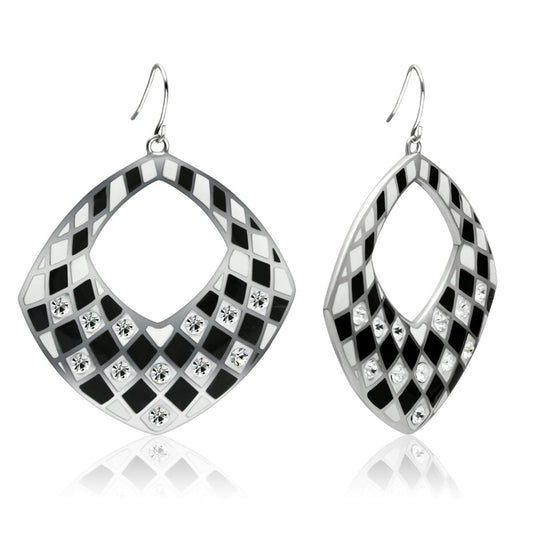
- or set into earrings to create concentrated sparkle around the face.
That versatility makes the material suitable for jewellery ranging from subtle everyday pieces to much more dramatic statement designs.
A pair of sparkling earrings, for example, can use carefully positioned stones to catch light whenever the wearer moves. In a necklace, the same material can be used very differently—as a single focal stone or as part of a larger arrangement.
Is cubic zirconia a real gemstone?
This question needs a little more nuance than a simple yes or no.
Cubic zirconia is real cubic zirconia. It is a genuine crystalline material with identifiable physical and optical properties. What it is not is a natural diamond.
Calling CZ a diamond simulant is therefore more accurate than simply calling it a "fake diamond."
A simulant is a material chosen because its visual appearance resembles another gemstone. It does not need to share that gemstone's chemical composition.
This is also why cubic zirconia vs lab-grown diamond is an important distinction:
| Material | Origin | Basic composition | Diamond? |
|---|---|---|---|
| Cubic zirconia | Laboratory-created | Zirconium dioxide (ZrO2) | No |
| Lab-grown diamond | Laboratory-created | Carbon | Yes |
| Natural diamond | Naturally formed | Carbon | Yes |
So while both CZ and lab-grown diamonds can be produced in controlled environments, that doesn't make them equivalent.
Lab-created describes origin. It doesn't describe composition.
What Is Cubic Zirconia Made Of?
The key ingredient is zirconium dioxide, with the chemical formula ZrO2.
You may also encounter the name zirconium oxide. In the context of cubic zirconia, both terms point to the material at the heart of the stone.
Under suitable manufacturing conditions, zirconium dioxide can be stabilised into the cubic crystalline structure from which cubic zirconia gets its name.
This crystal structure contributes to the stone's optical properties and allows the resulting crystalline material to be cut and polished into familiar jewellery shapes.
Once properly faceted, a colourless cubic zirconia stone can interact strongly with light. Instead of looking like a plain piece of transparent material, its facets redirect light to create the flashes and sparkle we associate with faceted jewellery stones.
That ability to transform light is one of the reasons CZ works so naturally in pieces such as necklaces, where a stone positioned around the neckline can catch changing light throughout the day.
Is cubic zirconia natural?
Commercial cubic zirconia used in jewellery is laboratory-created.
This is important because some terminology around gemstones can become confusing very quickly. "Synthetic", for instance, doesn't mean that an object doesn't exist or that it's made from plastic. In gemmological language, it generally tells us something about how a material originated.
Likewise, lab-created gemstone should not automatically be interpreted as lab-grown diamond.
The words laboratory-created describe the production environment. They do not make two different materials chemically identical.
How Is Cubic Zirconia Made?
Producing jewellery-quality CZ involves creating the conditions in which zirconium dioxide can form a stable cubic crystal.
At a simplified level, the process involves:
- Preparing zirconium dioxide material and the appropriate stabilising ingredients.
- Heating the material to extremely high temperatures until it melts.
- Controlling the cooling and crystallisation process so that cubic zirconia crystals form.
- Selecting suitable crystal material for jewellery production.
- Cutting the rough material into the desired gemstone shape.
- Creating and polishing the facets that ultimately produce the finished stone's brilliance and fire.
- Setting the polished CZ into the finished piece of jewellery.
The cutting stage deserves attention because a material's chemistry is only part of what you actually see when you look at jewellery.
Imagine a transparent crystal with no carefully planned facets. Light can enter it, but there is relatively little structure controlling how that light returns to your eye.
Now introduce precisely positioned facets.
Suddenly, light can bounce, split and return from multiple angles. The stone begins to come alive.
This is why two cubic zirconia stones aren't necessarily visually identical simply because they share the same basic material. Cut, proportions, polish and setting can all influence the finished appearance.
Why Does Cubic Zirconia Sparkle So Much?
Cubic zirconia has optical properties that allow a well-cut stone to produce significant brilliance and fire.
Those two words are related, but they aren't quite interchangeable.
Brilliance broadly describes the bright light returned from a faceted stone. Fire refers to flashes of spectral colour produced when white light is dispersed.
That dispersion can give CZ its recognisable rainbow sparkle or rainbow-like glow under certain lighting conditions.
In everyday terms: one effect makes the stone look bright; the other creates flashes of colour.
A stone's appearance is influenced by several interconnected factors:
- Refractive index — how strongly light bends as it enters the material.
- Dispersion — the separation of white light into spectral colours.
- Facets — the polished surfaces directing light through and out of the stone.
- Clarity — how clean and unobstructed the material appears.
- Cut quality — how effectively the stone's proportions manage incoming light.
- Lighting conditions — direct spot lighting, daylight and softer indoor light can make the same stone appear different.
This interaction is what gives well-cut CZ its lively visual character.
It's also why the stone works effectively when repeated across a design. A bracelet containing multiple faceted stones doesn't depend on a single point of reflection; movement continually changes the angle between the stones, the light and the eye.
The result can be a stream of shifting highlights rather than one static flash.
Is Cubic Zirconia Always Colourless?
No.
Colourless cubic zirconia is perhaps the most familiar version because it is widely used as a diamond alternative, but coloured cubic zirconia can also be produced.
This gives jewellery designers considerably more creative freedom.
A colourless stone can emphasise white brilliance, clarity and a classic diamond-inspired appearance. Coloured CZ, meanwhile, can introduce bolder shades while retaining the crisp faceting and reflective character associated with the material.
That flexibility is another reason cubic zirconia appears in so many jewellery categories and styles.
But appearance alone doesn't tell us how a stone will behave over years of wear.
For that, we need to look at hardness, scratch resistance and durability—and this is where the difference between cubic zirconia and diamond becomes much more significant.
How Hard Is Cubic Zirconia?
Cubic zirconia is a relatively hard material, which is one reason it works so well in jewellery. But "hard" has a specific meaning when we're talking about gemstones.
Gemstone hardness refers primarily to resistance to scratching, rather than whether a stone can survive every knock, drop or impact.
This is commonly discussed using the Mohs hardness scale, which ranks minerals according to their relative scratch resistance. Diamond sits at the top of that scale at 10, while cubic zirconia generally falls around 8 to 8.5.
That makes CZ considerably harder than many materials encountered in daily life, but less scratch-resistant than diamond.
This distinction becomes particularly relevant with everyday jewellery. A stone worn frequently can encounter hard surfaces, dust, cosmetics and other jewellery. Over time, those encounters may affect its polished surface.
Does cubic zirconia scratch?
Yes, it can.
Its respectable cubic zirconia hardness doesn't make the material scratch-proof. Because diamond is harder, CZ is more susceptible to accumulating fine surface scratches over prolonged wear.
Those tiny marks matter because sparkle depends on light.
When the facets of a freshly polished stone are clean and smooth, they interact with light efficiently. If the surface gradually becomes scratched or coated with residue, its brilliance can appear reduced.
That doesn't necessarily mean the stone itself has fundamentally changed. Sometimes what looks like deterioration is simply a combination of surface wear and accumulated oils or grime.
Hardness, toughness and durability aren't interchangeable terms. Hardness describes resistance to scratching; overall durability also depends on factors such as the stone's setting, exposure to impact and how the jewellery is worn and cared for.
Is Cubic Zirconia Durable?
For many jewellery applications, yes.
Cubic zirconia durability makes CZ suitable for rings, earrings, pendants, necklaces and bracelets, provided the piece is treated with reasonable care.
There is, however, an important difference between suitable for regular wear and indestructible.
Jewellery lives a surprisingly eventful life. Rings can strike worktops. Bracelets rub against desks. Earrings encounter hairspray and styling products. Necklaces come into contact with perfume, moisturiser and natural skin oils.
The stone doesn't exist in isolation either. Its setting and surrounding metal also affect how a piece responds to everyday wear.
For jewellery you plan to wear frequently:
- Avoid deliberately knocking the stones against hard surfaces.
- Remove jewellery before activities likely to cause heavy impact or abrasion.
- Keep cosmetics, creams and styling products from building up over the stones.
- Store pieces separately where practical to reduce scratching.
- Clean CZ periodically so residue doesn't disguise its natural brilliance.
This becomes especially important for cubic zirconia rings, because hands routinely encounter more surfaces than earrings or pendants do.
Cubic Zirconia vs Diamond: What's the Difference?
This is where one of the most common misunderstandings about CZ can be cleared up.
Cubic zirconia is not a type of diamond.
It is a separate material used as a diamond simulant because a well-cut colourless CZ can create a clear, bright and highly reflective appearance reminiscent of diamond.
The similarities are visual. The underlying materials are different.
| Feature | Cubic Zirconia | Diamond |
|---|---|---|
| Composition | Zirconium dioxide (ZrO2) | Carbon |
| Origin | Laboratory-created | Natural or laboratory-grown |
| Mohs hardness | Around 8–8.5 | 10 |
| Scratch resistance | High, but lower than diamond | Exceptionally high |
| Appearance | Bright with noticeable fire | Characteristic diamond brilliance and fire |
| Density | Denser than diamond | Less dense than CZ |
| Typical clarity | Often produced with a very clean appearance | Varies according to the individual diamond |
| Price | Highly affordable | Generally considerably more expensive |
| Material identity | Diamond simulant | Diamond |
The difference between cubic zirconia and diamond therefore goes much deeper than price.
1. They're made from different materials
Diamond consists of carbon arranged in a particular crystal structure.
Cubic zirconia consists primarily of zirconium dioxide.
This difference in composition affects hardness, density, thermal properties and the way each material interacts with light.
2. Diamond is harder
Diamond's famous hardness gives it exceptional scratch resistance.
CZ is also hard enough to be practical for jewellery, but it will generally show surface wear sooner than diamond when exposed to the same conditions repeatedly.
3. Their sparkle isn't identical
Both can sparkle beautifully, but not necessarily in precisely the same way.
CZ's dispersion can produce noticeable flashes of spectral colour—what jewellers commonly call fire. Depending on the cut and lighting, this can create a more obvious rainbow-like effect.
Diamond has its own balance of brilliance, fire and scintillation.
This means "more sparkle" isn't always a useful way to distinguish them. The character of that sparkle matters too.
4. Cubic zirconia is denser
An interesting physical difference is density.
Cubic zirconia has a greater specific gravity than diamond, so two stones of identical dimensions wouldn't necessarily weigh the same. A CZ stone can be noticeably heavier than a diamond of equivalent physical size.
This is one reason carat weight can be misleading when people try to compare different gemstone materials directly: carat measures weight, not visible dimensions.
5. CZ is much more affordable
Price is one of the clearest practical differences.
Creating the visual impact of a large, brilliant stone with natural diamond can involve substantial cost. Cubic zirconia makes a similar style of visual statement accessible at a dramatically different price point.
That's why calling CZ merely a "fake diamond" misses much of its appeal.
For many people, the objective isn't to convince someone that a CZ stone is a diamond. It's simply to enjoy bright, beautifully faceted jewellery at an accessible price.
Is Cubic Zirconia the Same as a Lab-Grown Diamond?
No.
This distinction is especially important because both materials can be made in controlled laboratory environments.
A lab-grown diamond is diamond.
Its essential chemical composition is carbon, just like a natural diamond. Cubic zirconia is zirconium dioxide and therefore belongs to a completely different material category.
Think of it this way:
Natural diamond → carbon → formed naturally
Lab-grown diamond → carbon → created under controlled conditions
Cubic zirconia → zirconium dioxide → created under controlled conditions
So although "lab-created" can describe both CZ and laboratory-grown diamonds in a broad sense, it doesn't mean they're the same substance.
This also explains why cubic zirconia vs lab-grown diamond isn't simply a comparison between two manufacturing methods. It's a comparison between two different materials.
Is Cubic Zirconia the Same as Zircon?
No—and the similarity between their names causes plenty of confusion.
Zircon and cubic zirconia are different materials.
Zircon is a naturally occurring mineral. Cubic zirconia, as used in jewellery, is a manufactured crystalline form of zirconium dioxide.
The word zirconia in cubic zirconia can make the two sound closely interchangeable, but they shouldn't be treated as different names for the same gemstone.
A useful shorthand is:
- Zircon = naturally occurring mineral.
- Cubic zirconia = laboratory-created zirconium dioxide crystal.
- Diamond = crystalline carbon.
- Lab-grown diamond = laboratory-created crystalline carbon.
If you're comparing jewellery, checking the exact material description is therefore more useful than relying on similar-sounding names.
Cubic Zirconia vs Moissanite
Moissanite is another stone commonly encountered when people investigate diamond alternatives, but it isn't another name for CZ.
Cubic zirconia and moissanite have different compositions and physical properties. They also interact with light differently, meaning their visual personalities aren't identical.
Both can create impressive sparkle, but a shopper deciding between cubic zirconia vs moissanite should consider more than appearance alone.
Relevant factors include:
- hardness and scratch resistance;
- brilliance and fire;
- colour characteristics;
- intended frequency of wear;
- stone size;
- setting style;
- and budget.
The important point is that CZ, moissanite and diamond are three distinct materials. They may occupy similar aesthetic territory in jewellery, but they shouldn't be presented as interchangeable substances.
Why Is Cubic Zirconia Cheaper Than Diamond?
Cubic zirconia's affordability isn't an indication that it somehow "failed" to become a diamond.
It's a different material with a different production process, supply structure and market value.
Jewellery-quality CZ can be manufactured at scale in controlled conditions. Natural diamonds, by contrast, originate from geological deposits and require mining, sorting and grading before suitable stones reach the jewellery market.
Lab-grown diamonds avoid the mining stage but are still diamonds and require specialised processes to create diamond crystal.
Cubic zirconia belongs to a different economic category.
That makes it an affordable alternative to diamonds for jewellery where visual impact matters more than owning diamond itself.
Is cubic zirconia worth anything?
Cubic zirconia has value as a jewellery material, but its value structure shouldn't be confused with that of natural diamond.
The cubic zirconia price is generally much lower, particularly when comparing larger stones.
This can actually be one of the material's creative advantages.
Designers can use more stones, larger centrepieces and dramatic arrangements without the material cost escalating in the same way it might with diamond.
The result can be jewellery that feels unapologetically glamorous rather than cautiously restrained.
Why Choose Cubic Zirconia Jewellery?
There isn't one universal reason. Different people value different things.
For some, it's affordability. For others, it's the clean appearance and strong sparkle. Others simply want jewellery that can deliver an eye-catching look without requiring the budget associated with fine diamond jewellery.
CZ offers several practical characteristics:
- Brilliance: well-cut stones can return plenty of light.
- Fire: dispersion can produce lively flashes of colour.
- Clarity: laboratory production allows CZ to have a very clean visual appearance.
- Versatility: stones can be cut into numerous shapes and sizes.
- Affordability: larger or more elaborate designs become accessible at lower material cost.
- Colour options: CZ doesn't have to be colourless.
- Design flexibility: it works as a centre stone, accent stone, halo or pavé detail.
Those qualities allow cubic zirconia jewellery to range from minimal pieces designed for daily styling to much bolder occasion jewellery.
What Cuts and Shapes Are Available in Cubic Zirconia?
One of CZ's strengths is how readily it can be cut and polished into familiar gemstone shapes.
You'll find cubic zirconia in styles including:
- Round cuts, prized for a classic, highly sparkling appearance;
- Princess cuts, with their distinctive square outline;
- Pear cuts, combining a rounded end with a tapered point;
- oval and rectangular cuts;
- heart-shaped stones;
- emerald-inspired cuts;
- and smaller stones intended for pavé settings.
A solitaire design uses a single stone as the principal visual focus. Pavé works in almost the opposite way: numerous smaller stones are positioned closely together to create a larger field of reflected light.
Neither approach is inherently better. They simply create different effects.
The choice of cut also affects how a stone handles light. Facet arrangement, depth and proportions all contribute to the finished appearance, so two CZ stones of similar dimensions can still look noticeably different.
Can You Wear Cubic Zirconia Every Day?
CZ can certainly be used for everyday wear, although expectations should reflect the material's properties.
Because cubic zirconia is less scratch-resistant than diamond, jewellery exposed to constant friction and impact may eventually show signs of surface wear. That doesn't make CZ unsuitable for regular use—it simply means care matters.
Earrings and pendants are often naturally protected from some of the knocks that rings and bracelets experience. Rings, by contrast, accompany your hands through almost everything you do.
How long a piece maintains its appearance therefore depends on more than the words "cubic zirconia" on its description.
Consider:
How often is it worn?
Occasional jewellery experiences much less cumulative wear than a piece worn every day.
Where is the stone positioned?
A raised stone can be more exposed to knocks than one protected by its setting.
What activities do you do while wearing it?
Exercise, cleaning, gardening and hands-on work can expose jewellery to unnecessary abrasion or impact.
How is it stored?
Throwing multiple pieces into one container can allow harder materials and metal components to rub against polished stones.
How is it cleaned?
Residue can dull the appearance of even an otherwise undamaged stone.
And that last point explains one of the most common complaints about CZ: a stone that once looked exceptionally bright can sometimes begin to look hazy or "cloudy."
The good news is that apparent cloudiness doesn't automatically mean the stone has reached the end of its life.
Understanding why cubic zirconia loses its sparkle, whether CZ tarnishes, how long it lasts and how to clean cubic zirconia safely can make an enormous difference to how the jewellery looks over time.
Does Cubic Zirconia Lose Its Sparkle?
It can appear to—but that doesn't necessarily mean the stone itself has suddenly lost its optical properties.
One of the reasons fresh cubic zirconia looks so striking is the relationship between its smooth, polished facets and light. When those surfaces are clean, light can enter and leave the stone efficiently, producing the brilliance and fire CZ is known for.
Everyday life gets in the way.
Hand cream, moisturiser, soap, natural skin oils, makeup, hairspray and general grime can gradually leave a film over the stone. That layer interferes with light reflection, making a previously brilliant CZ look dull.
Think of it like a clean window compared with one covered in fingerprints. The glass hasn't stopped being transparent; something on its surface is simply interfering with the light.
For CZ, cleaning can often make a surprisingly noticeable difference.
Long-term wear is slightly different. Because cubic zirconia has lower scratch resistance than diamond, repeated abrasion can eventually produce fine surface scratches. Those marks may also affect the crispness of its sparkle.
So when someone asks, "Does cubic zirconia lose its sparkle?", there are really two possibilities:
- Temporary dullness caused by residue, which may improve considerably after cleaning.
- Long-term surface wear, which can't necessarily be reversed through ordinary cleaning.
Knowing the difference prevents a dirty stone from being mistaken for a damaged one.
Does Cubic Zirconia Go Cloudy?
"Cloudy cubic zirconia" is a common way of describing a stone that no longer looks as crisp and bright as it once did.
Again, the cause isn't always the crystal itself.
A cloudy-looking CZ may simply have accumulated:
- natural skin oils;
- soap residue;
- hand cream;
- cosmetics;
- dust;
- styling products;
- or other deposits.
These substances can settle on the stone and around its setting, reducing the amount of light reaching its polished surfaces.
This is particularly noticeable on the underside of a stone. The top may receive an occasional wipe from clothing or a cloth, while the less accessible areas underneath gradually collect residue.
That's why simply polishing the visible top surface isn't always enough.
Does cubic zirconia fade?
A colourless cubic zirconia stone doesn't simply "fade" in the way dyed fabric might fade.
What people interpret as fading is often reduced brilliance caused by contamination or wear.
Coloured stones introduce additional considerations depending on how their colour has been produced, so the care instructions supplied with a particular piece should always take priority.
Does Cubic Zirconia Tarnish?
The stone itself and the metal surrounding it need to be considered separately.
Tarnish is primarily a metal issue rather than a property of cubic zirconia itself.
If a piece of CZ jewellery changes colour or develops surface tarnish, the relevant question is therefore what metal the jewellery is made from and how that material should be maintained.
This distinction is useful because people sometimes assume any visible change to a piece of jewellery must have been caused by its stones.
It may not have been.
A cubic zirconia stone can become dirty at the same time as the surrounding metal develops tarnish or surface wear. Each material may consequently require different care.
When caring for CZ jewellery, don't think only about the stone. The setting, plating and underlying metal can determine which cleaning methods are appropriate for the complete piece.
Always follow the care recommendations supplied for your particular jewellery rather than assuming that a cleaning method suitable for a loose CZ stone will automatically be suitable for everything surrounding it.
Can Cubic Zirconia Get Wet?
Brief contact with ordinary water isn't the same thing as deliberately exposing jewellery to everything that happens in a shower, swimming pool or hot tub.
Water itself is only one part of the equation.
Showering can expose jewellery to shampoo, conditioner, shower gel and other products that may leave deposits. Swimming pools introduce chemicals such as chlorine, while seawater brings salt and sand into the picture.
For that reason, removing jewellery before showering, swimming or bathing is generally the more cautious habit.
It also reduces the possibility of snagging, accidental knocks or losing a piece.
Can you shower with cubic zirconia?
Rather than asking whether the CZ crystal can physically survive contact with shower water, consider the entire piece of jewellery.
Repeated exposure may affect the surrounding metal, plating or finish differently from the stone itself. Soap and hair products can also contribute to the residue that eventually makes CZ appear cloudy.
Removing the jewellery beforehand keeps the care routine simple:
Jewellery off → shower → skincare and fragrance → allow products to settle → jewellery back on.
That small habit can reduce unnecessary exposure to products that don't need to be on your jewellery in the first place.
How to Clean Cubic Zirconia
Regular, gentle cleaning is one of the simplest ways to preserve the appearance of cubic zirconia jewellery.
Before cleaning any piece, however, check the care instructions for its metal, plating, setting and any other decorative materials. A method that's harmless to one component isn't automatically appropriate for another.
Where the construction of the jewellery permits gentle washing, a straightforward approach is usually preferable to aggressive cleaning.
A gentle CZ cleaning routine
-
Prepare some lukewarm water.
Avoid extreme temperatures. -
Add a small amount of mild soap.
You don't need a highly concentrated cleaning solution. -
Clean gently.
Where appropriate for the particular piece, a very soft brush can help reach areas around the setting where oils and debris collect. -
Pay attention to the back of the stone.
Residue underneath CZ can interfere with the passage of light and make the stone appear dull from above. -
Rinse carefully if the jewellery's care instructions allow it.
Make sure no soap film remains behind. -
Dry thoroughly.
A soft, clean, lint-free cloth can help remove moisture without introducing unnecessary abrasion. -
Inspect the piece before putting it away.
Make sure it's fully dry and check that the stone appears secure in its setting.
The guiding principle is simple: gentle beats aggressive.
Avoid experimenting with harsh household chemicals, abrasive powders or rough cleaning materials simply because an online "hack" promises instant results.
Jewellery contains more than its stones.
How Often Should You Clean Cubic Zirconia Jewellery?
There isn't a universal timetable because wear habits vary enormously.
A piece worn several times a week will encounter more oils and cosmetic products than jewellery worn once every few months.
Instead of obsessing over a calendar, pay attention to appearance.
If a previously brilliant stone begins looking slightly flat, inspect it under good light. Visible fingerprints or residue are a strong indication that gentle cleaning may help.
You can also reduce the need for deep cleaning by adopting a few simple habits:
- Handle stones as little as practical.
- Put jewellery on after applying cosmetics, perfume and styling products.
- Remove it before exercise, bathing or swimming.
- Wipe pieces gently after wear when appropriate.
- Store jewellery clean and dry.
- Keep individual pieces separated to minimise rubbing and scratching.
Good jewellery care is largely preventative.
The less residue and abrasion a piece encounters, the less corrective cleaning it should require.
How Long Does Cubic Zirconia Last?
There isn't a single expiration date for cubic zirconia.
Its appearance over time depends heavily on how often it's worn, where it's worn, how it's stored and how it's cared for.
A CZ pendant worn occasionally may experience very little physical contact. A ring worn every day lives a much harder life.
Consider two identical stones.
One spends most of its time safely stored and comes out for occasional evenings. The other is worn daily while its owner works, cleans, exercises and sleeps.
Chemically, they began as the same material.
After years of use, however, their surfaces may tell very different stories.
That's why asking "How long does cubic zirconia last?" is less useful than asking:
How can I help my cubic zirconia jewellery stay looking its best?
The answer is straightforward:
- minimise unnecessary impact;
- avoid abrasive contact;
- reduce exposure to chemicals and cosmetics;
- clean it gently when required;
- and store it thoughtfully.
Cubic zirconia isn't diamond, and it shouldn't be expected to have diamond's exceptional scratch resistance. But with sensible treatment, it can continue to deliver the bright appearance that made it appealing in the first place.
How Should You Store Cubic Zirconia Jewellery?
Storage is easy to overlook because nothing appears to be happening while jewellery sits in a box.
In reality, poor storage can create unnecessary surface contact.
Throw several pieces together and stones, clasps, chains and metal edges can rub against one another whenever the container is moved.
A better approach is to keep pieces separated where practical.
A soft-lined jewellery box, individual compartment or suitable pouch can reduce contact between items. Necklaces should also be arranged in a way that helps prevent chains from becoming tangled.
Before storage, make sure jewellery is reasonably clean and completely dry.
This is especially useful for pieces worn regularly. Putting jewellery away while it's still coated with perfume, skin oils or moisture simply leaves those substances sitting on the surface until the next wear.
Is Cubic Zirconia Good for Everyday Jewellery?
For many people, yes.
CZ combines visual impact with affordability, making it particularly useful when you want jewellery that can be enjoyed rather than treated as something too precious to touch.
The important part is matching expectations to the material.
If your priority is maximum possible scratch resistance over decades of continuous wear, diamond has physical advantages that CZ doesn't share.
If your priority is brilliance, versatility and an accessible price, cubic zirconia has a very different proposition.
Neither observation requires pretending the two materials are identical.
In fact, appreciating CZ becomes easier once you stop asking it to be diamond.
Cubic zirconia can stand on its own as a highly versatile jewellery material: bright, precisely cut, available in numerous shapes and colours, and capable of bringing significant sparkle to a design without demanding the investment associated with diamond.
What Should You Look for When Choosing Cubic Zirconia Jewellery?
Not every decision should revolve around the stone alone.
The finished piece matters.
When choosing CZ jewellery, consider:
The overall design
Do you want something minimal enough for daily styling, or a piece intended to make an immediate statement?
A tiny pavé arrangement and a large solitaire may use the same gemstone material but produce completely different impressions.
The cut
Well-defined, polished facets play an important role in how effectively a CZ stone handles light.
Look at the stone from different angles rather than judging it from one perfectly illuminated photograph or viewpoint.
The setting
The setting doesn't merely hold the stone in place. It influences the character of the design and how exposed the gemstone may be to knocks.
The metal and finish
Remember that caring for cubic zirconia means caring for the entire piece.
Check what the jewellery is made from and follow appropriate instructions for that material.
Your lifestyle
A dramatic raised ring may look spectacular, but someone who works extensively with their hands may prefer a less exposed design for frequent wear.
Your expectations
Perhaps most importantly, buy CZ for what it is.
If you're choosing it because you want accessible sparkle, interesting design and a brilliant-looking stone, its affordability can be an advantage rather than something requiring an apology.
Frequently Asked Questions About Cubic Zirconia
What is cubic zirconia?
Cubic zirconia, or CZ, is a laboratory-created crystalline form of zirconium dioxide (ZrO2). It is widely used in jewellery because it can be cut and polished to produce impressive brilliance and fire.
What does CZ mean?
CZ is the commonly used abbreviation for cubic zirconia.
Is cubic zirconia real?
Cubic zirconia is a real manufactured crystalline material. It is not, however, a natural diamond or lab-grown diamond.
Is cubic zirconia a diamond?
No. CZ is a diamond simulant, meaning it can resemble diamond visually while having a different chemical composition and different physical properties.
Is cubic zirconia a lab-grown diamond?
No. A lab-grown diamond consists of crystalline carbon and is diamond. Cubic zirconia is primarily zirconium dioxide.
Is cubic zirconia the same as zircon?
No. Despite their similar names, zircon and cubic zirconia are different materials. Zircon is a naturally occurring mineral, whereas jewellery-quality CZ is laboratory-created zirconium dioxide.
Is cubic zirconia the same as moissanite?
No. Moissanite and cubic zirconia have different compositions and physical properties. Both may be considered when looking at diamond alternatives, but they're distinct materials.
How hard is cubic zirconia?
Cubic zirconia generally measures around 8 to 8.5 on the Mohs hardness scale. This gives it good scratch resistance for many jewellery applications, although diamond is considerably harder at 10.
Does cubic zirconia scratch?
Yes. CZ is hard but not scratch-proof. Fine surface wear may develop over time, particularly on jewellery exposed to frequent friction or impact.
Why is cubic zirconia cheaper than diamond?
CZ is a different material that can be manufactured efficiently under controlled conditions. Its production, availability and market value differ significantly from natural and lab-grown diamonds, resulting in a much lower typical price.
Does cubic zirconia tarnish?
The cubic zirconia stone itself isn't normally what people mean when they see jewellery "tarnish." Tarnishing generally relates to the metal surrounding the stone, so care requirements depend on the complete piece.
Does cubic zirconia go cloudy?
It can look cloudy when oils, soap, cosmetics and other residue build up on its surface. Gentle cleaning may restore much of the stone's visible brilliance when dirt rather than permanent surface wear is responsible.
Does cubic zirconia lose its sparkle?
CZ can appear less sparkling when dirty, and long-term scratching can also affect its polished surface. Regular gentle cleaning and careful storage help maintain its appearance.
Can cubic zirconia get wet?
Occasional contact with water is different from routinely showering or swimming while wearing jewellery. Removing CZ jewellery before bathing and swimming can reduce exposure to soaps, chlorine, salt and other substances while also protecting the surrounding metal and finish.
How do you clean cubic zirconia?
Where suitable for the complete piece, gentle cleaning with lukewarm water, mild soap and a soft brush can help remove residue. Dry it carefully with a soft lint-free cloth. Always follow the specific care instructions for the jewellery's metal and finish.
Is cubic zirconia good for everyday wear?
It can be. CZ has sufficient hardness and durability for many everyday jewellery designs, although pieces worn constantly—especially rings—will naturally experience more abrasion and impact than occasional jewellery.
Is cubic zirconia worth anything?
Cubic zirconia has value as a jewellery material, but it isn't typically valued like natural diamond. Its affordability is one of the reasons designers can create larger, more stone-intensive pieces at accessible prices.
Cubic Zirconia: More Than a Diamond Lookalike
So, What Is Cubic Zirconia? Everything You Need to Know ultimately comes down to understanding the material on its own terms.
CZ is a laboratory-created crystalline form of zirconium dioxide. It isn't diamond, isn't lab-grown diamond and shouldn't be confused with zircon or moissanite.
Yet those differences don't diminish what cubic zirconia can do.
Its clarity allows light to travel through a clean-looking stone. Its dispersion produces colourful fire. Skilled cutting turns the crystalline material into carefully arranged facets that flash as the jewellery moves. Its hardness makes it practical for many jewellery applications, while its affordability gives designers room to experiment with size, shape and abundance.
Perhaps most importantly, cubic zirconia doesn't need to pretend to be something else to justify its place in jewellery.
A diamond is a diamond.
A moissanite is a moissanite.
A zircon is a zircon.
And cubic zirconia is cubic zirconia—a bright, versatile and accessible material with its own optical properties, advantages and care requirements.
Treat it thoughtfully, keep its facets clean, protect it from unnecessary abrasion and choose designs you genuinely enjoy wearing.
Because jewellery's purpose isn't simply to contain the most expensive material possible.
It's to be worn.