
Gemstone jewelry is having a particularly colorful year. The Most Popular Gemstones for Women's Jewelry in 2026 range from enduring favorites such as sapphire, ruby, emerald and diamond to expressive stones including amethyst, blue topaz, citrine, garnet, peridot, tanzanite and tourmaline. The common thread is color, personality and jewelry that feels distinctly personal.
The quick take: sapphire is one of 2026's most versatile gemstone choices thanks to its remarkable range of colors, while ruby and emerald continue to bring unmistakable red and green to fine jewelry. Amethyst, topaz, garnet and peridot offer an expansive palette for everyday pieces, and rarer stones such as alexandrite, tanzanite, spinel and Paraiba tourmaline appeal to anyone looking beyond the familiar. Birthstones and colorful gemstone jewelry also make it easier to choose pieces for their personal symbolism rather than simply following a trend.
For women choosing jewelry this year, that means there is no single "correct" stone. The best gemstone can be the one whose color catches your eye, whose birthstone meaning matters to you, or simply the one you cannot stop looking at.
2026 in one sentence: gemstone jewelry is becoming less about playing it safe and more about choosing color, character and pieces that feel personal.
Why Colorful Gemstones Feel So Right for 2026
For a long time, a great deal of fine jewelry conversation revolved around neutral sparkle. Diamond remains important, of course, but colored gemstones create something different: an immediate sense of personality.
A deep blue sapphire can feel composed and timeless. Emerald brings saturated green. Ruby supplies unmistakable red. Purple amethyst is difficult to confuse with anything else. Citrine introduces golden warmth, while peridot's lively green can completely change the mood of a piece.
That variety makes women's gemstone jewelry unusually adaptable. A gemstone does not have to be reserved for a formal occasion or milestone gift. Color can work just as naturally in gemstone rings worn every day as it does in a statement piece saved for evenings and celebrations.
The wider 2026 jewelry trends also make room for individuality. Instead of every piece needing to match perfectly, jewelry can be layered, stacked and combined. Contrasting jewel tones can sit together. A delicate pendant can be worn beside another necklace. A colorful ring can become the focal point of an otherwise minimal look.
That freedom is one reason gemstone trends in 2026 feel less like a rigid rulebook and more like an invitation to experiment.
What Makes a Gemstone Popular?
Popularity is more complicated than simply counting which stone appears most often in a jewelry box.
For this guide, there are several qualities worth considering:
- Color: Does the gemstone offer a distinctive or versatile color?
- Wearability: Is it suitable for the type of jewelry in which it is commonly set?
- Versatility: Can it move between everyday jewelry and more formal pieces?
- Meaning: Does birthstone meaning or gemstone symbolism add personal significance?
- Variety: Does the gem offer different hues, cuts and styling possibilities?
- Individuality: Can it give the wearer something less predictable than conventional jewelry choices?
Gemstone durability matters too. Rings, for example, usually encounter more knocks and abrasion than pendants or earrings, so gemstone hardness and the setting should be considered alongside appearance. "Beautiful" and "appropriate for every type of daily wear" are not necessarily the same thing.
With that in mind, we can get to the stones themselves.
1. Sapphire: The Color Chameleon of 2026
If one gemstone demonstrates just how broad colored gemstone jewelry can be, it is sapphire.
Mention sapphire and most people immediately picture blue. That association is understandable: a rich blue sapphire has an instantly recognizable elegance. Yet stopping at blue misses much of what makes sapphire so interesting.
Sapphires occur in an extraordinary spectrum of colors. Depending on the stone, shoppers may encounter pink sapphire, yellow sapphire, teal sapphire and other coloured sapphire varieties. There are also highly distinctive names within the category, including Padparadscha sapphire, associated with a pink-orange color range.
Then there are designs that combine multiple hues, giving rise to terms such as rainbow sapphire and multicolour sapphire jewelry.
In other words, sapphire can be classic without being predictable.
Why Sapphire Works So Well in Women's Jewelry
Sapphire's appeal extends beyond color. Corundum—the mineral family that includes sapphire and ruby—has a Mohs hardness of 9, making sapphire a particularly useful choice for jewelry intended to be worn frequently.
That combination of beauty, gemstone durability and variety gives designers enormous freedom.
A blue sapphire can become the center of a sophisticated ring. Pink and yellow sapphires can bring a brighter, more playful character. Smaller stones can create colourful accents around another gemstone or become part of a multicolour arrangement.
Sapphire can therefore appear across:
- solitaire and statement rings;
- gemstone pendant necklaces;
- stud and drop earrings;
- tennis-style and multi-stone bracelets;
- gemstone engagement rings; and
- birthstone jewelry for September.
It is equally at home as a focal stone or as part of a broader palette.
A sapphire pendant, for instance, can introduce color without overwhelming an outfit. If that lighter approach appeals to you, browsing different necklace styles can help show how a gemstone's visual impact changes depending on chain length, scale and setting.
Blue Sapphire vs. the Unexpected Colors
Traditional blue sapphire still has enormous appeal, especially for women who gravitate toward deep blue gemstones and timeless jewelry. But 2026 gives shoppers plenty of reasons to explore beyond it.
Pink sapphire brings softness without losing saturation. Yellow sapphire can introduce a bright golden tone. Teal sapphire sits in that fascinating territory between blue and green. Padparadscha sapphire, meanwhile, is prized for a much warmer pink-orange appearance.
This range matters because "sapphire jewelry" no longer describes a single aesthetic.
It can be restrained.
It can be romantic.
It can be vivid.
It can even be rainbow-colored.
That makes sapphire one of the strongest examples of a wider movement toward personalised gemstone jewellery: choosing a piece because the particular color speaks to you, rather than because convention says that is the color you should wear.
2. Ruby: Red That Never Whispers
Some gemstones complement an outfit quietly.
Ruby is rarely one of them.
Its defining red color gives ruby jewelry an immediate focal point, whether the stone appears in a ring, necklace, bracelet or pair of earrings. The finest-looking examples can possess an intense, vivid red, while individual stones naturally vary in hue and saturation.
Ruby is also the red variety of corundum, putting it in the same mineral family as sapphire. With a Mohs hardness of 9, it combines striking color with the hardness expected from one of fine jewelry's most established precious gemstones.
Why Ruby Continues to Matter in 2026
Trends move quickly, but some gemstones survive them because their identity is so strong.
Ruby has that advantage.
The color red carries associations ranging from passion and romance to confidence and celebration, which helps explain why ruby has remained popular in milestone jewellery, anniversary jewellery and gemstone gifts. It is also the traditional July birthstone, adding another layer of personal relevance.
Burmese ruby is a term shoppers may encounter when exploring gemstone origin and heritage, referring to rubies associated with Myanmar. Origin, however, is only one part of understanding any individual stone. Gemstone quality can involve a combination of factors such as color, clarity, cut, carat weight and treatment.
For someone choosing ruby jewelry, the visual question is simpler: do you love the particular red of the stone in front of you?
That is ultimately more useful than choosing a gemstone because its name appears on a trend list.
Ruby Styling in 2026
Red gemstones naturally command attention, so ruby works beautifully when allowed to become the visual center of a look.
A ruby ring can provide a concentrated flash of color. Smaller stones can be easier to incorporate into everyday gemstone jewellery, while earrings place that vivid red close to the face. Explore different earring silhouettes and the personality of the gemstone can change dramatically—from subtle studs to more noticeable drops.
Ruby also pairs naturally with the current enthusiasm for jewelry stacking. Rather than matching every component, a ruby piece can be the deliberate interruption: one shot of red among quieter metals or contrasting gemstones.
A gemstone does not need to match everything you own. Sometimes its job is to be the thing that doesn't.
3. Emerald: The Green Gemstone That Owns Its Color
There are green gemstones, and then there is emerald.
Its name has practically become a color in its own right.
Emerald belongs to the beryl mineral family and has centuries of history in fine jewellery. In 2026, however, it does not need to feel historical or formal. Modern settings can make emerald look remarkably fresh, particularly when the design allows its saturated green to do most of the talking.
Among the most popular gemstones for women, emerald is compelling because it occupies a very different visual space from sapphire and ruby. Put the three beside one another and you have three unmistakable color identities: blue, red and green.
Emerald Is Beautiful, but Wear It Thoughtfully
This is where gemstone durability becomes important.
Emerald generally falls around 7.5–8 on the Mohs hardness scale, but hardness alone does not tell the whole story of how a gemstone behaves in jewelry. Natural inclusions and fractures can influence an individual emerald's toughness, and many emeralds are treated to improve the appearance of surface-reaching fissures.
That does not make emerald unsuitable for jewelry. It means the design, setting and way you intend to wear it deserve consideration.
A necklace or pair of earrings experiences different stresses from a ring worn on the hand every day. Anyone buying an emerald piece for frequent wear should therefore pay attention to both the stone and how securely it is protected by the setting.
This is a useful principle for all natural gemstones:
Choose with your lifestyle as well as your eyes.
A gemstone can have extraordinary color, but the best gemstones for jewelry are the ones used appropriately for the piece being created.
Why Emerald Fits the 2026 Mood
Green has presence without necessarily feeling loud. An emerald can be dramatic in a statement ring yet refined when used as a smaller accent stone.
It also works beautifully with the move toward modern heirloom jewellery—pieces with enough character to feel distinctive now, but enough visual staying power to be worn for years.
For shoppers who love green gemstones but want to explore a broader spectrum, emerald is only the beginning. Peridot, tsavorite garnet, tourmaline and even certain sapphires offer completely different interpretations of green, which we will come to later.
4. Amethyst: Purple With Personality
Amethyst proves that a recognizable gemstone does not have to feel conventional.
Its purple palette can range considerably, from lighter violet tones to richer, more saturated purples. That gives designers room to create everything from understated everyday jewellery to larger statement pieces.
It is also February's birthstone, so amethyst naturally sits at the intersection of birthstone jewelry, gemstone symbolism and personal gifting.
But you do not need a February birthday to wear it.
That point matters in 2026. Birthstones are increasingly useful as a source of personal inspiration rather than a set of rules. Someone may choose purple amethyst because it marks a birthday, because the color has meaning to them, or simply because purple looks spectacular against their wardrobe.
Where Amethyst Works Best
Amethyst is quartz, with a Mohs hardness of 7. It can be used across many types of jewellery, although—as with any gemstone—the setting and intended wear should influence the choice.
Its visual versatility makes it particularly effective in:
- statement and cocktail rings;
- gemstone pendants;
- drop earrings;
- birthstone jewelry;
- bracelets with colorful stone accents; and
- multi-gemstone jewellery.
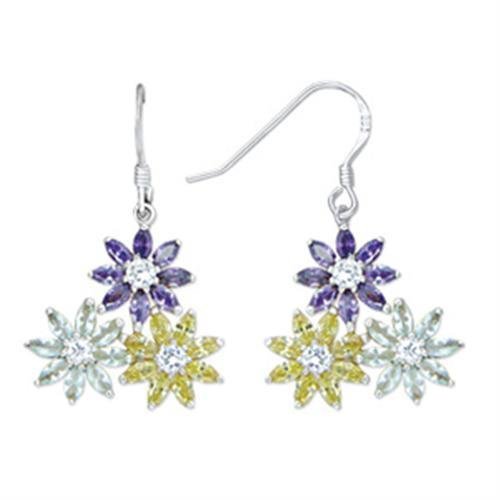
Amethyst can also provide a strong counterpoint to golden gemstones such as citrine or green stones such as peridot. Those combinations are especially interesting when jewelry is treated as a palette rather than a collection of perfectly matching pieces.
And that is one of the defining ideas behind The Most Popular Gemstones for Women's Jewelry in 2026: the most exciting gemstone collection may not be the one containing a single "best" stone.
It may be the one that contains your colors.
Whether those colors eventually meet in one piece or are built gradually across a bracelet collection, the result can feel far more individual than simply following a prescribed jewelry formula.
The 2026 Gemstone Palette Is Only Getting Broader
Sapphire, ruby, emerald and amethyst establish four very different starting points: blue and multicolour versatility, powerful red, saturated green and unmistakable purple.
But they are only the beginning.
The next group widens the palette considerably. Blue topaz brings clear, luminous blues; citrine introduces golden warmth; garnet reaches beyond the dark red many people expect; and peridot delivers a fresh green that could hardly be mistaken for emerald.
Then things become rarer and more unusual.
Tanzanite. Alexandrite. Tourmaline. Spinel. Aquamarine. Opal. Moonstone.
Each changes the answer to the question, "What is the most popular gemstone?" because popularity alone is not really what makes gemstone jewelry interesting in 2026.
Choice is.
5. Blue Topaz: Clear, Bright and Effortlessly Wearable
If sapphire represents the deeper, more dramatic side of blue gemstones, blue topaz occupies a brighter part of the spectrum.
Its clean, luminous appearance makes it particularly easy to wear. Depending on the variety and treatment, blue topaz can range from pale, icy blue to the stronger shades commonly sold under names such as Swiss blue and London blue topaz.
That range gives blue topaz a useful quality in women's jewelry: it can be noticeable without feeling heavy.
A lighter stone can look crisp and understated in everyday gemstone jewellery, while a deeper blue can carry enough saturation for a solitaire or statement design.
Why Blue Topaz Remains Popular
Topaz has a Mohs hardness of 8, but hardness is not the only consideration when evaluating gemstone durability. Topaz has perfect cleavage in one direction, meaning a hard impact in an unfortunate direction can damage the stone.
So, as with emerald, the question should not simply be:
"Is this gemstone hard?"
A better question is:
"Is this gemstone suitable for the piece, setting and way I intend to wear it?"
That distinction becomes particularly important when comparing gemstone rings with earrings and pendants, which generally encounter fewer knocks during normal wear.
Blue topaz also has an accessible visual appeal. You do not need specialist gem knowledge to understand why someone likes it. The attraction can be immediate: it is blue, bright and beautifully clear-looking.
For December birthdays, topaz also enters the conversation around birthstones and personalised birthstone jewellery. Yet its appeal stretches well beyond birthstone meaning.
Sometimes you simply want blue.
And blue topaz delivers it beautifully.
6. Citrine: A Little Sunshine in Gemstone Form
Not every colorful gemstone needs to be cool-toned.
Citrine brings warmth.
Its colors occupy the yellow-to-orange range of quartz, producing everything from lighter yellow shades to deeper golden and orange-brown tones. In a jewelry landscape filled with blues, greens and purples, that warmth gives citrine a distinctive role.
Think of it as sunlight among jewel tones.
Citrine can be especially attractive when the aim is to create jewelry that feels cheerful rather than overly formal. Its golden gemstone color works naturally in pendants, earrings, cocktail rings and multi-stone designs, and it can create striking contrast beside purple amethyst.
There is a mineralogical reason for that pairing: amethyst and citrine are both varieties of quartz.
Citrine as a November Birthstone
Citrine is also associated with November, giving it a natural place in birthstone jewelry and birthday jewellery.
That does not mean every citrine piece needs to be marketed—or worn—as a birthstone.
One of the more interesting developments in modern gemstone jewelry is the loosening of those traditional boundaries. Birthstones can provide a starting point, but personal color preference is often more important.
You might choose citrine because:
- it represents a November birthday;
- its warm color complements the metals you already wear;
- you prefer yellow gemstones to cooler blues and greens;
- you want an alternative to a colorless center stone; or
- its golden appearance simply makes you happy.
That last reason is perfectly valid.
Gemstone meaning can add emotional value to jewellery, but meaning does not have to come from a traditional symbolism guide. Jewelry can acquire significance because of who gave it to you, when you bought it, where you wore it, or what it reminds you of.
That personal meaning often becomes far more enduring.
7. Garnet: Far More Than Dark Red
Ask someone to picture garnet and there is a good chance they will imagine a deep red gemstone.
They would not be wrong.
But they would only be seeing part of the picture.
The garnet group contains gemstones in a surprisingly broad range of colors. Red remains its best-known identity, but garnets can also occur in orange, yellow and green varieties, among others.
That makes garnet one of the more interesting gemstones for women who like discovering familiar names in unfamiliar colors.
Red Garnet vs. Tsavorite Garnet
Traditional red garnet offers rich color that can work beautifully in both vintage-inspired and contemporary jewellery.
Then there is tsavorite garnet.
Tsavorite belongs to the grossular garnet species and is prized for its green color. Visually, it occupies completely different territory from the red garnet many shoppers know.
This is precisely why gemstone education can make shopping more interesting.
A name you thought described one color suddenly opens an entirely different palette.
Garnet is also the traditional January birthstone, making it an obvious candidate for birthday jewellery and gemstone gifts. Yet, once again, its appeal should not be confined to the calendar.
A deep red garnet can provide richness without looking identical to ruby. A green garnet can offer an alternative for someone who loves emerald-like colors but wants to explore another gemstone entirely.
A Note on Gemstone Names
This is also a good point to be careful with terminology.
Gemstone names can describe mineral species, varieties, geographic associations, colors or commercial categories. Those distinctions are not always obvious when shopping.
If gemstone origin, treatment or rarity materially affects your buying decision, look for clear product information rather than relying on evocative terminology alone.
Terms such as natural gemstones, genuine gemstones, rare gemstones and ethically sourced gemstones can sound reassuring, but meaningful transparency comes from specific information about the stone rather than broad marketing language.
The more important the purchase, the more worthwhile those details become.
8. Peridot: Green With the Brightness Turned Up
Emerald does not have a monopoly on green.
Peridot proves it.
Where emerald can produce rich, saturated green, peridot often has a lighter, fresher quality. Its characteristic yellowish-green to green appearance gives it an energetic look that is immediately distinguishable from many other green gemstones.
That difference is precisely its strength.
Peridot does not need to imitate emerald.
It has its own personality.
As the traditional August birthstone, it works naturally in birthstone rings and other personalised jewellery, but its vivid color also makes it useful in multi-gemstone designs.
Pair it with purple amethyst and the contrast is immediate. Place it near blue topaz and the result becomes cooler and fresher. Combine it with citrine and the palette moves toward bright, sunlit greens and yellows.
This is where the 2026 jewellery trends around color become genuinely fun.
Instead of asking whether two gemstones traditionally "go together," you can ask whether you enjoy what their colors do beside each other.
Your jewellery box does not need a strict colour palette. It can have moods.
9. Tanzanite: A Modern Gemstone With an Extraordinary Color
Some gemstones have been used in jewellery for thousands of years.
Tanzanite has a much more recent story.
Discovered commercially in the 20th century, tanzanite quickly became recognized for its remarkable blue-to-violet appearance. The gemstone is a variety of zoisite and is associated with a geographically restricted source in Tanzania.
That combination of distinctive color and limited geographic origin has helped give tanzanite an identity quite unlike sapphire or blue topaz.
Look closely at good tanzanite and simple color labels start to feel inadequate.
Is it blue?
Violet?
Blue-violet?
Depending on the individual stone, lighting, orientation and treatment, the visual impression can shift.
That complexity is a major part of its appeal.
Tanzanite Requires More Considered Wear
Tanzanite is not as hard as sapphire or ruby. It sits around 6–7 on the Mohs scale and requires more thoughtful care, particularly in jewellery likely to experience impacts.
This makes design choice important.
Tanzanite earrings and pendants can showcase the stone's blue-violet color while placing it in jewellery that may experience less daily punishment than a heavily worn ring.
For someone attracted to rare gemstones, tanzanite is worth knowing not simply because of rarity language, but because its geographic source and visual identity are unusually specific.
It feels different.
And in a year where individuality is such a strong theme, "different" can be exactly the point.
10. Alexandrite: The Gemstone That Refuses to Pick One Color
Few gemstones demonstrate the importance of lighting quite like alexandrite.
It is famous for its color-change phenomenon, traditionally appearing greener in daylight-like illumination and shifting toward red or purplish-red under warmer incandescent-type light, although the strength and exact nature of the change varies between stones.
That ability has made colour-changing alexandrite one of the most fascinating gemstones in fine jewelry.
It also creates an important lesson about buying colored gemstones:
Always consider how a gemstone looks under more than one type of light.
A photograph captures one moment. A gemstone exists in changing environments.
Daylight, warm indoor lighting and cool artificial illumination can all influence how color is perceived. This applies beyond alexandrite, but a strong color-change stone makes the effect particularly obvious.
Why Alexandrite Appeals to Collectors
Natural alexandrite with desirable color and a pronounced color change can be rare and valuable. It is therefore a gemstone where factors such as origin, gemstone quality, treatment disclosure and identification can matter considerably.
Alexandrite is also associated with June as a birthstone.
But its greatest appeal may be less symbolic and more experiential.
You look once.
You look again somewhere else.
The stone has changed.
For anyone who thinks fine jewellery is too predictable, alexandrite makes a persuasive counterargument.
11. Tourmaline: Almost a Jewellery Colour Chart by Itself
If 2026 is about color, tourmaline deserves serious attention.
Tourmaline occurs in an extensive range of hues, including pink, green, blue and combinations of colors within a single crystal. That diversity makes the tourmaline family especially appealing for women who want gemstone jewelry that feels individual.
Pink tourmaline can be soft or vivid.
Green tourmaline can move through an enormous spectrum.
Some tourmalines display multiple color zones.
And then there is Paraiba tourmaline.
Why Paraiba Tourmaline Gets So Much Attention
Paraiba-type tourmalines are renowned for intensely saturated blue, green and blue-green colors associated with copper and manganese.
Descriptions such as "electric" and "neon" are often used because ordinary blue-green can seem insufficient to describe the visual effect of exceptional examples.
They also demonstrate why gemstone value cannot be reduced to a simple formula.
Two stones bearing the same broad gemstone name can differ dramatically in color, clarity, carat, cut, origin, treatment and market value.
This applies throughout fine jewellery.
A gemstone's name tells you what category you are looking at.
It does not tell you everything about the individual stone.
12. Spinel: The Gemstone More People Are Finally Learning to Name
For centuries, spinel had an unusual problem: some spectacular examples were mistaken for other precious gemstones, particularly ruby.
Today, spinel has an identity of its own.
And it deserves one.
Spinel can occur in red, pink, purple, blue and other colors. That palette makes it particularly well suited to the current appetite for vibrant gemstone jewellery and less obvious gemstone choices.
Among the names enthusiasts may encounter is Mahenge spinel, associated with material from Tanzania and particularly noted for attractive pink-to-red colors.
For a shopper, though, the broader point is more useful than memorizing geographic names.
Spinel provides another option.
If you love vivid red gemstones, ruby is not your only conversation. If you love pink gemstones, sapphire and tourmaline are not your only choices either.
The more you learn about coloured gemstones, the larger the jewellery world becomes.
Spinel and the Rise of the Informed Gemstone Buyer
This may be one of the quieter gemstone trends of 2026: shoppers increasingly have access to the vocabulary needed to look beyond the handful of precious gemstones everybody recognizes.
That creates room for stones such as spinel, tanzanite and alexandrite to sit beside sapphire, ruby and emerald rather than simply behind them.
It also changes what "luxury jewellery" can mean.
Luxury does not have to be the most recognizable gemstone in the room. It can be unusual color, thoughtful design, craftsmanship, personal significance or the pleasure of wearing a gemstone that invites someone to ask:
"What stone is that?"
Beyond the Big Names: The Gemstones to Watch Next
At this point, our 2026 palette has expanded considerably:
Sapphire gives us blues, pinks, yellows, teals and more.
Ruby owns vivid red.
Emerald supplies unmistakable green.
Amethyst brings purple.
Blue topaz offers clear, luminous blue.
Citrine adds yellow and golden warmth.
Garnet moves from familiar reds into surprising greens.
Peridot introduces a bright, fresh green.
Tanzanite shifts through blue-violet.
Alexandrite can visibly change color.
Tourmaline offers an extraordinary spectrum.
Spinel brings another family of vivid reds, pinks, blues and purples.
And we still have not exhausted the gemstone collection.
In the final third, the spotlight moves to aquamarine, opal, moonstone, pearl, turquoise, zircon, jade, morganite, rose quartz and diamond, before bringing everything together with practical guidance on gemstone hardness, treatments, color, quality, jewellery styling, birthstones and how to choose the right gemstone for you.
Because after all the gemstone trends, rankings and fashionable colors have had their say, there is one question that matters considerably more:
Which gemstone will you actually want to keep wearing when 2026 is over?
13. Aquamarine: A Softer Side of Blue
Not every blue gemstone needs to shout.
Aquamarine does something quieter.
A member of the beryl mineral family—the same mineral family as emerald—aquamarine is known for blue to blue-green colors that can evoke clear water, open skies and sea glass. Where sapphire can feel deep and dramatic and blue topaz can appear bright and crisp, aquamarine often occupies a softer visual space.
That makes it especially appealing for women who want blue gemstones without intense saturation.
Aquamarine is also the traditional March birthstone, so it naturally appears in personalised birthstone jewellery, birthday jewellery and milestone gifts.
Why Aquamarine Works Beyond Birthstone Jewelry
Aquamarine's appeal is not dependent on having a March birthday.
Its restrained color makes it easy to incorporate into everyday gemstone jewellery, particularly for someone who prefers pastel gemstones to stronger jewel tones.
It can look delicate in a pendant.
Fresh in earrings.
Elegant in a ring.
And because aquamarine usually does not visually dominate everything around it, it can work beautifully in layered jewellery and mixed gemstone combinations.
With a Mohs hardness of around 7.5–8, aquamarine also has useful hardness for jewelry, although any gemstone can still be damaged and the design and setting remain important.
For women drawn to quiet color rather than maximum saturation, aquamarine may be one of 2026's easiest gemstones to love.
14. Opal: When Color Refuses to Stay Still
Some gemstones are prized for having one exceptional color.
Opal can contain many.
Precious opal is celebrated for play-of-color—flashes and shifting patches of spectral color that can appear to move as the gemstone, viewer or light source changes position.
One moment you see green.
Then blue.
Then perhaps orange or red.
It is less like looking at a single color and more like watching color happen.
That makes opal a natural fit for the growing interest in jewellery that feels individual.
Two opals can have completely different personalities.
Why Opal Needs Thoughtful Care
Opal is also a good reminder that beauty and durability are separate considerations.
With a Mohs hardness commonly around 5.5–6.5, opal is softer than stones such as sapphire and ruby. It also requires sensible care because opals can be vulnerable to scratching and damage.
That does not mean opal should sit unworn in a box.
It means the type of jewellery, setting and lifestyle of the wearer matter.
An opal pendant or pair of earrings can provide spectacular color while typically encountering less impact than a ring worn every day. Protective settings can also make a difference when opal is used in rings.
This is a recurring theme throughout this guide:
The best gemstone is not simply the prettiest stone. It is a stone that makes sense for how you want to wear it.
For someone who values individuality above uniformity, opal has another advantage: its appearance can be remarkably distinctive.
In a world of mass-produced sameness, that feels particularly relevant.
15. Moonstone: Glow Instead of Sparkle
If diamond is associated with brilliance and opal with play-of-color, moonstone is known for something subtler: adularescence.
This optical phenomenon can create a floating, almost glowing light across the stone.
The effect can be ethereal.
Rather than competing with intensely saturated gemstones, moonstone offers a different kind of visual interest. It can suit women who gravitate toward softer, dreamier jewellery and stones that reveal themselves gradually rather than immediately.
Moonstone also fits naturally with several broader 2026 jewellery aesthetics:
- soft and pastel gemstone palettes;
- layered necklaces;
- organic and nature-inspired designs;
- modern heirloom jewellery;
- mixed gemstone combinations; and
- jewellery chosen for personal symbolism.
It is not one of the hardest gemstones, however. Moonstone is generally around 6–6.5 on the Mohs scale and should be treated with appropriate care.
That makes it another stone where design choice matters.
Sometimes the smartest way to enjoy a gemstone is not to demand that it withstand every possible situation, but to choose a piece that respects the material.
16. Pearls: Still Classic, Just Less Predictable
Strictly speaking, pearls are organic gems rather than mineral gemstones.
But any serious discussion of popular gems in women's jewelry would feel incomplete without them.
Pearls have never really disappeared. What changes is how they are worn.
The perfectly matched strand remains iconic, but contemporary pearl jewellery can be much less formal. Pearls can appear in asymmetrical designs, minimalist pieces, mixed-metal jewellery and combinations with colored gemstones.
And then there are baroque pearls.
The Appeal of Baroque Pearls
Baroque pearls reject the idea that beauty requires perfect symmetry.
Their irregular forms mean that shape becomes part of the design rather than something that needs to be hidden.
That quality works particularly well with the 2026 preference for jewellery that feels individual.
One pearl might be elongated.
Another rounded but uneven.
Another wonderfully strange.
Rather than asking, "Why isn't this pearl perfectly round?" the more interesting question becomes:
"What can a designer do with this shape?"
Modern pearl jewellery therefore sits in an interesting position. It can reference generations of jewellery tradition without necessarily looking traditional.
Pearls can be polished.
Minimal.
Romantic.
Architectural.
Unexpected.
Classic does not have to mean conventional.
17. Turquoise: Color You Can Recognize Across a Room
Few gemstone names have become so synonymous with their color as turquoise.
Its characteristic blue-to-green appearance can make turquoise jewellery instantly recognizable, and its long history across different cultures gives it a visual identity quite unlike transparent faceted gems.
Turquoise does not need brilliance to attract attention.
Its strength is color.
It can look particularly effective in jewellery where the stone is given enough surface area to show that color clearly.
Because turquoise is relatively soft and porous compared with many faceted gemstones, care matters. Exposure to cosmetics, chemicals, oils and inappropriate cleaning methods can affect some turquoise, and treatments are common within the market.
This makes disclosure particularly useful when purchasing higher-value pieces.
The wider lesson applies to all gemstone jewellery:
Treatment is not automatically a bad word. Undisclosed or misunderstood treatment is the problem.
Many accepted gemstone treatments have been used within the jewellery industry for years. What matters is knowing what you are buying and caring for it appropriately.
18. Zircon: The Natural Gemstone That Deserves Its Own Identity
Zircon has spent far too long being confused with cubic zirconia.
They are not the same material.
Zircon is a natural gemstone with its own mineral identity and a history stretching back far beyond the creation of synthetic cubic zirconia.
It can occur in several colors, including blue, yellow, brown and colorless varieties. Zircon is also known for strong dispersion, which can produce noticeable flashes of spectral color.
That makes it worth considering for anyone interested in gemstones beyond the usual names.
The confusion around zircon also highlights why gemstone terminology matters.
A shopper who assumes zircon means cubic zirconia may overlook an entirely different natural gem.
Knowledge expands choice.
And choice is one of the recurring themes of The Most Popular Gemstones for Women's Jewelry in 2026.
19. Jade: Beauty Beyond Faceted Sparkle
Not every important gem needs to be cut into a brilliant faceted stone.
Jade demonstrates another tradition of gem beauty entirely.
The name jade commonly encompasses two distinct gem materials: jadeite and nephrite. Both have long histories of carving and ornamentation, although their properties, rarity and market values can differ substantially.
Jade can occur in different colors, with green being especially famous, but it should not be reduced to a single shade.
Its appeal also challenges a very Western-centric assumption about gemstone jewelry: that the most desirable gem must necessarily be transparent, faceted and sparkling.
Sometimes color, texture, translucency, polish and carving are the story.
That broader perspective makes a gemstone collection far more interesting.
20. Morganite: The Softer Pink Option
For shoppers attracted to pink gemstones, morganite offers a distinctly gentle interpretation.
Like emerald and aquamarine, morganite belongs to the beryl family. Its colors typically occupy the pink-to-peach spectrum, giving it a softer appearance than many vivid pink sapphires or tourmalines.
That subtlety makes morganite particularly suited to jewellery with a romantic or understated character.
It can also complement warm-toned metals beautifully, although personal preference should always outrank styling "rules."
With a Mohs hardness around 7.5–8, morganite offers respectable hardness, but—as always—hardness is only one component of gemstone durability.
Morganite's place among popular gemstones is a useful reminder that vibrant gemstone jewellery does not always mean intensely saturated color.
Pastels can make just as strong an aesthetic statement.
They simply speak more softly.
21. Rose Quartz: Pink Without the Formality
If morganite offers a refined transparent-to-translucent pink, rose quartz brings a softer and often more casual interpretation.
Its pale pink color has made it popular in jewellery and decorative objects, and it frequently appears in conversations around gemstone symbolism.
Claims about crystals having medical or scientifically demonstrated healing powers should be treated separately from cultural, spiritual or personal beliefs. A gemstone can hold enormous emotional or symbolic significance to someone without requiring unsupported health claims.
That distinction matters.
Gemstone meaning can be personal without being medical.
Rose quartz can represent affection, a memory, a relationship or simply a color the wearer loves.
Jewellery does not need a laboratory-tested emotional meaning to become meaningful.
Often, we create that meaning ourselves.
22. Diamond: The Classic Isn't Going Anywhere
With so much color in 2026, it might seem strange to return to diamond.
But colored gemstones becoming more prominent does not mean diamond has stopped mattering.
Quite the opposite.
Diamond can act as the neutral point around which color is built.
Small diamonds can frame a sapphire.
Accentuate an emerald.
Contrast with ruby.
Or provide flashes of brightness around a colored center stone.
Diamond also exists beyond the familiar colorless appearance.
Brown, Black and Fancy Coloured Diamonds
Brown diamonds can produce warm, earthy tones.
Black diamonds create a dramatically different aesthetic.
Natural fancy coloured diamonds can occur in colors including yellow, pink and blue, although rarity and value vary enormously according to the characteristics of the individual stone.
This gives diamond a broader visual vocabulary than "clear and sparkling."
Then there is another increasingly familiar category: lab-grown diamond.
Natural vs. Lab-Grown Diamonds
Lab-grown diamonds are diamonds produced in controlled technological environments rather than formed naturally within the Earth.
They should not be confused with diamond simulants.
A lab-grown diamond has essentially the same crystal structure and fundamental material as a natural diamond, but the two have different origins.
For shoppers, the important principle is transparency.
Whether choosing natural gemstones, lab-grown gemstones or lab-grown diamonds, you should be able to understand what you are purchasing.
That means accurate descriptions matter more than assumptions.
How to Choose the Right Gemstone for You in 2026
After twenty-two sections, perhaps you expected one gemstone to emerge victorious.
That would miss the point.
The popularity of colored gemstones in 2026 is exciting precisely because women have more meaningful choices.
The right gemstone depends on you.
Here are the factors worth considering before buying.
1. Start With Color
Forget rarity for a moment.
Forget trends.
Forget what someone else says you should like.
Which color are your eyes drawn to?
If it is deep blue, start with sapphire.
If you prefer lighter blue, compare aquamarine and blue topaz.
Love green? Look at emerald, peridot, green tourmaline, tsavorite garnet and green sapphire.
Prefer red? Compare ruby, red spinel and garnet.
For pink, explore pink sapphire, pink tourmaline, morganite, spinel and rose quartz.
Purple brings amethyst immediately into consideration, while tanzanite can move into blue-violet territory.
Color is not a superficial consideration in colored gemstone jewellery.
It is often the entire reason you fall in love with the piece.
2. Think About How Often You Will Wear It
A piece intended for occasional evening wear has different practical requirements from a ring worn every day.
Consider:
- gemstone hardness;
- overall toughness;
- vulnerability to cleavage or fracture;
- the protection provided by the setting;
- exposure to chemicals and cosmetics;
- cleaning requirements; and
- whether the jewellery will routinely experience knocks or abrasion.
This does not mean only buying the hardest stones.
It means matching the gemstone to the job.
3. Understand Gemstone Treatments
Treatments are common throughout the gemstone world.
Heating, oiling, irradiation and other processes may be used with particular gem materials for different purposes. Whether a treatment is standard, unusual or value-affecting depends on the gemstone and process involved.
Do not assume "treated" automatically means undesirable.
Instead, ask:
What treatment has this gemstone received, is it stable, and does it affect how I should care for the piece?
Clear information is far more useful than fear of the word treatment itself.
4. Look Beyond Carat Weight
Gemstone carat measures weight, not beauty.
Two gemstones of equal carat weight can look different in physical size because gem materials have different densities. Cut proportions also influence how large a stone appears when viewed from above.
When comparing colored gemstones, consider the complete picture:
color + cut + clarity + carat + character.
Color may be especially influential for many coloured stones.
A larger gemstone is not automatically a better gemstone.
5. Decide Whether Birthstone Meaning Matters to You
Birthstones offer an easy way to personalize jewellery.
They can represent your own birthday, a partner, child, parent or another important person.
A piece might even combine multiple birthstones to represent a family.
But birthstone traditions are invitations, not restrictions.
You do not need to be born in September to wear sapphire.
You do not need an April birthday to wear diamond.
And you certainly do not need permission from the calendar to love emerald.
6. Choose Jewellery You Will Still Love After the Trend Changes
This may be the most important point in the entire guide.
2026 jewelry trends will eventually become 2027 jewelry trends.
Fashion changes.
Your jewellery does not have to change with it.
If you are buying something you hope to wear for years—or perhaps eventually pass on as heirloom jewellery—choose a gemstone and design that connects with you beyond its current popularity.
Trend awareness can help you discover something.
Personal taste should decide whether you keep it.
2026 Gemstone Color Guide
If you know the color you want but not the gemstone, use this as a quick starting point:
| Color family | Gemstones to explore |
|---|---|
| Blue | Sapphire, aquamarine, blue topaz, zircon, tanzanite |
| Green | Emerald, peridot, tourmaline, tsavorite garnet, sapphire |
| Red | Ruby, garnet, spinel |
| Pink | Pink sapphire, pink tourmaline, morganite, spinel, rose quartz |
| Purple | Amethyst, purple sapphire, spinel, some tanzanite |
| Yellow/Golden | Citrine, yellow sapphire, topaz, diamond |
| Orange | Citrine, orange sapphire, garnet, Padparadscha sapphire |
| Blue-Green | Paraiba tourmaline, teal sapphire, turquoise, some aquamarine |
| Black | Black diamond, black onyx |
| White/Colorless | Diamond, white sapphire, white topaz, colorless zircon |
| Multicolour/Changing | Opal, alexandrite, multicolour sapphire, bi-colour tourmaline |
This is not an exhaustive list. Nature is much less interested in tidy color categories than we are.
And that is part of the fun.
The Most Popular Gemstones for Women's Jewelry in 2026: At a Glance
For anyone who skipped straight to the answer, here it is.
The gemstone landscape in 2026 stretches well beyond the traditional quartet of diamond, sapphire, ruby and emerald.
Some of the most compelling gemstones to know include:
- Sapphire — versatile, durable and available in far more colors than blue.
- Ruby — unmistakable red with enduring fine-jewellery appeal.
- Emerald — saturated green and instantly recognizable.
- Amethyst — expressive purple with accessible everyday versatility.
- Blue topaz — bright blue and easy to style.
- Citrine — warm yellow-to-golden color.
- Garnet — a gemstone family with far more colors than many expect.
- Peridot — fresh, lively green.
- Tanzanite — distinctive blue-violet color.
- Alexandrite — prized for its remarkable color change.
- Tourmaline — one of the broadest gemstone color families.
- Spinel — vivid colors and growing recognition in its own right.
- Aquamarine — serene pale-to-medium blues.
- Opal — extraordinary play-of-color.
- Moonstone — soft adularescent glow.
- Pearl — an organic gem moving confidently into modern styling.
- Turquoise — unmistakable blue-green color.
- Zircon — a natural gemstone with impressive optical properties.
- Jade — a historic gem material with a completely different visual language.
- Morganite — soft pink-to-peach beryl.
- Rose quartz — approachable, gentle pink.
- Diamond — still fundamental, but increasingly part of a much more colorful jewellery conversation.
So, What Is the Most Popular Gemstone for Women in 2026?
There is no single answer—and that may be the clearest answer of all.
Sapphire remains exceptionally versatile. Ruby and emerald carry generations of recognition. Diamond retains its central role in fine jewelry. Amethyst, topaz, garnet and peridot make color approachable, while tanzanite, alexandrite, spinel and tourmaline reward shoppers willing to explore further.
Opal does things with light that most gemstones cannot.
Moonstone glows.
Pearls bring texture.
Aquamarine whispers blue.
Citrine feels like bottled sunlight.
And none of them needs to defeat the others to deserve a place in your jewellery box.
The defining idea behind The Most Popular Gemstones for Women's Jewelry in 2026 is not that women have collectively chosen one winning stone.
It is that the field has opened up.
Color is welcome.
Birthstones can be personal rather than prescriptive.
Precious and semi-precious gemstones can be mixed.
Everyday jewellery can contain genuine character.
Statement jewellery can be playful rather than formal.
And modern gemstone jewellery can be selected according to the person who will actually wear it.
Frequently Asked Questions
What gemstones are most popular for women's jewelry in 2026?
Sapphire, ruby, emerald and diamond remain major fine-jewellery gemstones, while amethyst, topaz, garnet, peridot, tanzanite, tourmaline, spinel, aquamarine and opal broaden the 2026 color palette. The right choice depends on color preference, jewellery type, durability requirements, budget and personal meaning.
What is the best gemstone for everyday jewelry?
There is no universal best stone for every wearer or design. Sapphire and ruby have excellent hardness, while diamond is harder still. However, overall durability involves more than Mohs hardness, and the setting, jewellery type and wearer's lifestyle should also be considered.
Which gemstones come in blue?
Popular blue gemstones include blue sapphire, aquamarine, blue topaz, blue zircon and tanzanite, although their hues can be dramatically different. Teal sapphire and Paraiba tourmaline can also move into blue-green territory.
Which gemstones are popular for green jewelry?
Emerald is perhaps the most famous green gemstone, but peridot, green tourmaline, tsavorite garnet and green or teal sapphire offer alternatives with very different shades and visual characteristics.
What gemstones are pink?
Pink sapphire, pink tourmaline, morganite, spinel and rose quartz are among the options worth exploring. Fancy pink diamonds also exist, although natural examples can occupy a very different rarity and price category.
Are birthstones still popular in 2026?
Birthstone jewelry fits naturally with the wider preference for personalised jewellery because it can represent birthdays, family members, anniversaries and other personal connections. Birthstone traditions do not prevent someone from wearing a gemstone associated with another month.
Are lab-grown gemstones real gemstones?
"Lab-grown" describes origin rather than automatically meaning imitation. Lab-grown materials can have essentially the same chemical composition and crystal structure as their natural counterparts, depending on the gemstone. They should be clearly disclosed so buyers understand what they are purchasing.
Does a higher carat always mean a better gemstone?
No. Carat measures weight. Gemstone quality and desirability can also depend on color, cut, clarity, rarity, treatment, origin and the characteristics valued for that particular gem material. Bigger does not automatically mean better.
What is the difference between precious and semi-precious gemstones?
The traditional terms divide a small group—usually diamond, ruby, sapphire and emerald—from other gemstones. However, the distinction can be misleading if interpreted as a direct measure of rarity, beauty or value. Individual gemstones outside the traditional "precious" category can be rare and highly valued.
How should gemstone jewelry be cleaned?
There is no single cleaning method suitable for every gemstone. Some stones tolerate cleaning methods that may be inappropriate for others, particularly gems that are porous, fractured, treated or sensitive to heat and chemicals. Care advice should therefore be specific to the gemstone and jewellery construction.
Final Thoughts: Let Color Tell Your Story
The most interesting jewellery rarely begins with an algorithm, a trend report or a rule about what someone is supposed to wear.
It begins with attraction.
A particular blue.
A flash of green.
An impossible red.
A stone that changes under different light.
A pearl whose irregular shape makes it more interesting, not less.
A birthstone representing someone you love.
A gemstone you knew nothing about five minutes ago and suddenly cannot forget.
That is where the real value of 2026's gemstone trends lies. They give women more reasons to look beyond the familiar and discover just how broad the world of gemstone jewelry actually is.
Choose sapphire because you love blue.
Choose ruby because subtle isn't what you came for.
Choose emerald for its green, aquamarine for its calm, amethyst for its purple, citrine for its warmth or opal because you cannot decide on one color.
Choose a birthstone for its symbolism.
Choose something unusual because nobody else in the room is wearing it.
Choose a future heirloom.
Choose an everyday piece.
Choose color.
But above all, choose jewellery because you want to wear it.
Because the most important gemstone trend of 2026 is not sapphire, ruby, emerald, tourmaline or diamond.
It is personality.