
What Is a Bezel Setting? A Complete Guide
When you hear "bezel setting," think of a protective metal frame custom-made for your gemstone. Instead of using tiny claws (like you see in a prong setting) to hold the stone, a bezel wraps a sleek, continuous rim of metal all the way around the gem’s edge. It’s like a tiny, custom-fit hug for your diamond or gemstone.
The result is a smooth, modern, and incredibly secure finish. Because there are no prongs to catch on your favorite sweater or snag in your hair, it’s one of the most practical and wearable settings you can choose. This makes it an amazing option for anyone with an active lifestyle or a job that’s tough on their hands, from doctors and nurses to artists and athletes.
A Timeless Technique with Ancient Roots
Don't let its modern look fool you—the bezel setting isn't some new trend. It’s actually one of the oldest and most trusted techniques in jewelry history, with roots tracing all the way back to ancient Egypt and Rome. Early jewelers loved this method because it was a brilliant way to secure precious stones without today’s fancy tools. They’d simply create a slot for the stone and fold the metal over its edges.
That ancient durability is a huge part of its appeal today. You can read more about its incredible history and enduring design over on Shane Co's blog.
A bezel setting is the perfect marriage of form and function. It delivers a clean, contemporary style while giving your gemstone the ultimate protection from the bumps and scrapes of daily life.
To really get a feel for bezel settings, it helps to know the two main styles you'll come across:
- Full Bezel: Just like it sounds, this style completely encircles the gemstone with a continuous metal rim. It offers 360-degree protection and creates a bold, minimalist silhouette.
- Partial Bezel: Also called a semi-bezel, this design uses two metal arcs to secure the stone instead of a full circle. This leaves parts of the stone's sides exposed, letting in a little more light while still offering great security.
Both options offer fantastic security and a totally different vibe, which we'll get into more. Whether you're hunting for the perfect engagement ring or adding a new piece to your jewelry box from our curated collections, understanding these basics is the first step toward finding something you’ll love for a lifetime.
Full vs. Partial Bezel Settings: What's the Difference?
When you start looking at bezel settings, you'll quickly discover there are two main camps: the full bezel and the partial bezel. Think of it as choosing between maximum security and maximum sparkle. Each one has a totally different vibe and interacts with the gemstone in its own unique way, so the right choice depends entirely on your lifestyle and aesthetic preferences.
The full bezel is the most secure setting you can get, period. It’s a complete metal collar that wraps around the entire edge of the gemstone, giving it 360-degree protection. This style is perfect if you have an active lifestyle, work with your hands, or just want total peace of mind. It creates a sleek, modern look that beautifully frames the stone, shielding its vulnerable edges from any accidental bumps or snags.
The Partial Bezel: A Brilliant Compromise
On the other hand, you have the partial bezel (sometimes called a semi-bezel), which takes a more open-air approach. Instead of a full circle of metal, this design cleverly uses two metal arcs to hold the gemstone in place, usually on opposite sides. This leaves parts of the stone's profile exposed, letting light stream in from the sides.
It’s a fantastic middle ground, offering solid security without completely hiding the gem. For instance, many of our stunning bezel-set rings use partial designs specifically to boost the fire of the center stone. The result is a ring that feels incredibly secure but sparkles with a noticeable extra brilliance.
This infographic gives you a great visual of how each setting works.
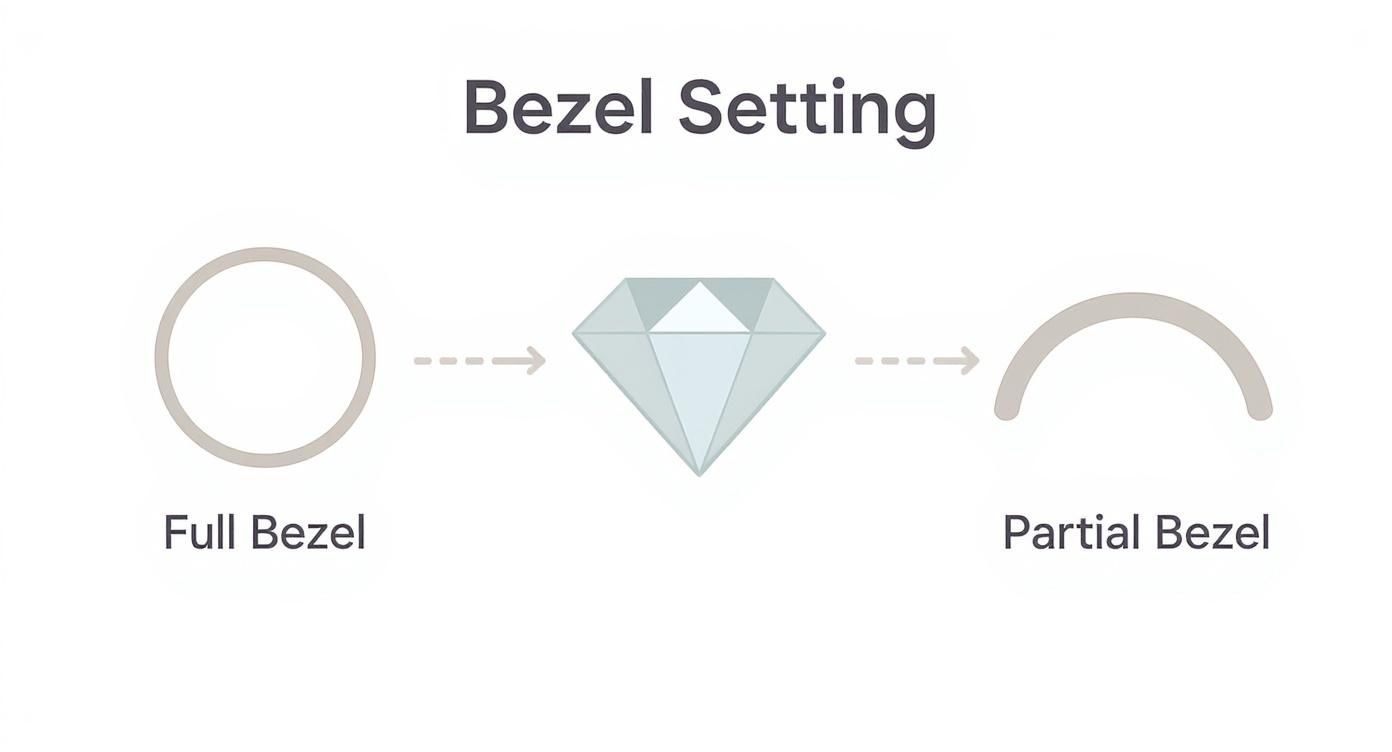
As you can see, the full bezel is all about complete enclosure, while the partial bezel strategically opens things up. Ultimately, the right choice really boils down to what you prioritize.
Do you want the ultimate fortress of a full bezel, or do you prefer the light-catching openness of a partial one? The full bezel gives off a clean, minimalist aesthetic, while the partial bezel feels more dynamic and airy.
Both are fantastic options, but they cater to slightly different tastes. One delivers unbeatable durability and a contemporary look, while the other invites more light into the stone for a livelier, more dazzling sparkle.
The Pros and Cons of a Bezel Setting
No ring setting is perfect—every single one comes with trade-offs. Picking the right one means knowing what you value most, whether it's blinding sparkle, maximum security, or a sleek, modern vibe. The bezel setting is a fantastic choice, but it's not for everyone. It offers a unique mix of strengths and weaknesses that really caters to specific lifestyles and tastes.
Let's break down what makes this setting shine and where it might fall a little short.
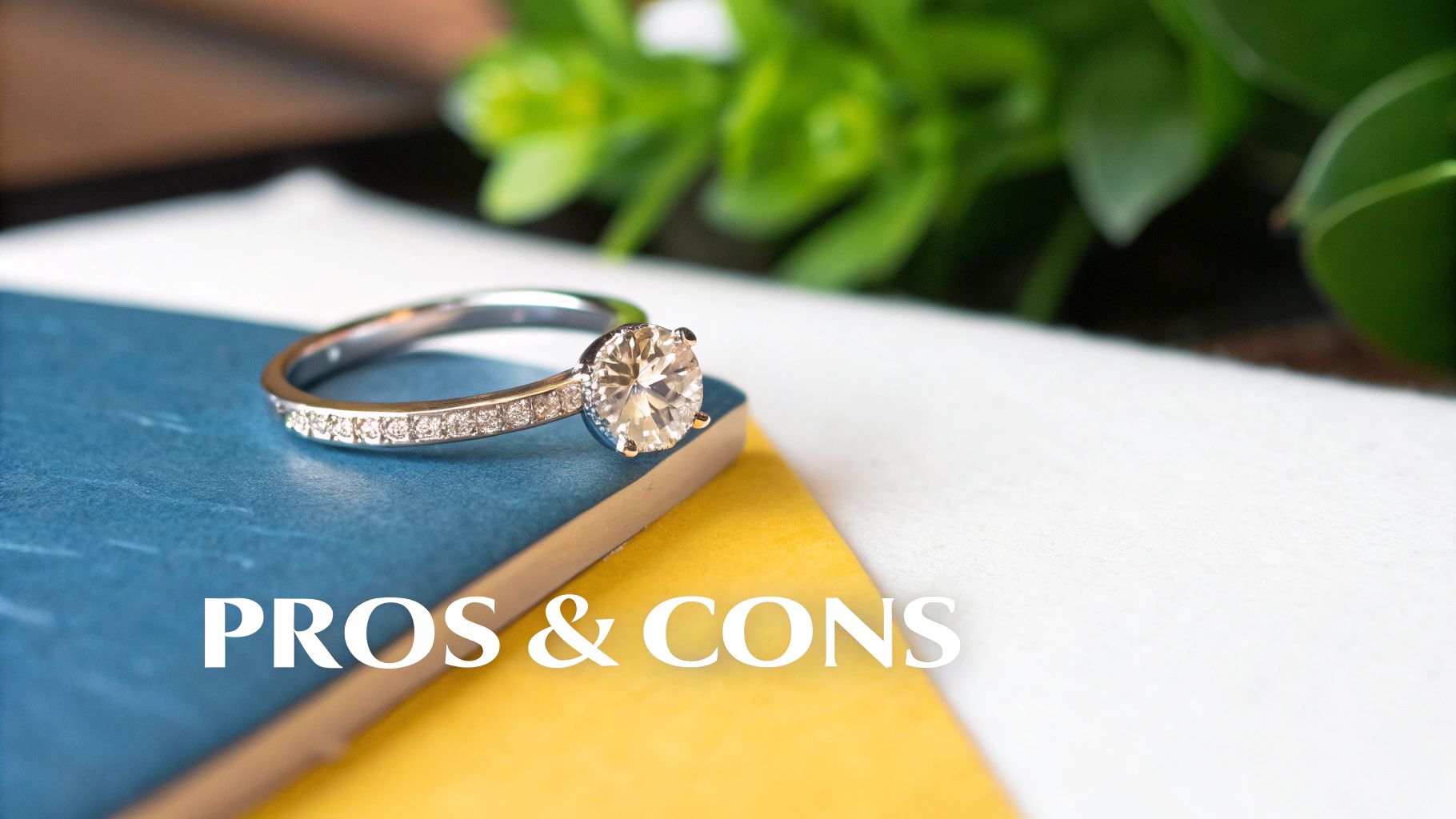
Why You Might Love a Bezel Setting (The Pros)
The biggest draw? Unmatched security. Think of the metal rim as a personal bodyguard for your gemstone. It wraps around the entire edge (the girdle) like a protective bumper, shielding it from accidental bumps and knocks. This design is incredible at preventing chips and, best of all, it completely eliminates snagging on clothes or hair—a constant headache with prong settings.
This rock-solid durability has made bezels a go-to for centuries, especially for protecting valuable or more fragile gems. In fact, jewelers will tell you that prong failures are one of the most common reasons for ring repairs. The bezel's sturdy construction practically eliminates that risk, making it a brilliant choice for softer stones like opals or emeralds. For a deeper dive into its history, you can explore the bezel's origins and evolution on Wikipedia.
Beyond keeping your stone safe, bezel settings have a few other great perks:
- Modern and Sleek Appearance: The smooth, clean lines create a contemporary and sophisticated look. It frames the center stone beautifully, making it feel like a tiny piece of art.
- Low Maintenance: Seriously low maintenance. With no prongs to check or tighten, you can pretty much set it and forget it. They require far less frequent trips to the jeweler for check-ups.
- Hides Imperfections: That metal rim is great at hiding things. It can cleverly conceal minor inclusions or small chips along the gemstone's edge, making the stone look even better.
What to Watch Out For (The Cons)
Of course, that protective nature comes with a couple of drawbacks. The most common concern people have is how it affects the gemstone's sparkle.
By covering the sides of the stone, a full bezel setting can limit the amount of light that enters from the side. This may slightly reduce its brilliance compared to an open prong setting that lets light flood in from all angles.
Don't get me wrong, a well-cut diamond will still throw off plenty of fire from the light entering its top, but the overall effect can be a bit different.
Another thing to keep in mind is that the metal frame can sometimes make the center stone appear a little smaller than it actually is. The type of metal you choose also plays a big role in the ring's final look. Our guide on the best metals for jewelry is a great resource for figuring out which material will best complement your stone and personal style.
At the end of the day, deciding if a bezel is right for you means weighing its superior protection against these aesthetic trade-offs.
Bezel Setting At a Glance Pros vs Cons
Here’s a quick summary to help you see how the bezel setting stacks up. This table breaks down the key advantages and disadvantages at a glance, making it easier to decide if this style aligns with your priorities.
| Feature | Pros (Advantages) | Cons (Disadvantages) |
|---|---|---|
| Security | Exceptional protection against chips and snags. The safest setting available. | None—this is its greatest strength. |
| Style | Offers a modern, sleek, and minimalist look that frames the stone beautifully. | The metal rim can make the stone appear slightly smaller. |
| Maintenance | Very low maintenance with no prongs to check, tighten, or catch on things. | Can be more difficult to clean underneath the stone. |
| Sparkle | The frame can cleverly hide inclusions or chips on the stone's edge. | May reduce light entry from the sides, slightly dimming the stone's sparkle. |
| Versatility | Excellent choice for active lifestyles and for protecting softer gemstones. | Less traditional look compared to a classic prong setting. |
Ultimately, choosing a bezel setting is a personal decision that balances a love for modern aesthetics with a practical need for security. It's an elegant, worry-free option perfect for anyone who leads an active life or simply adores its clean, contemporary design.
How Bezel Settings Compare to Other Ring Styles
To really get a feel for what a bezel setting is, it helps to see how it stacks up against the other big names in the ring world. Putting it side-by-side with the most popular alternatives really highlights what makes it unique and helps you figure out if it’s the right fit for your style and your life.
The classic showdown is always bezel vs. prong. You can think of it as the ultimate battle between security and sparkle. A prong setting uses tiny metal claws to hold the diamond up high, exposing it to light from every possible angle. This creates that jaw-dropping, fiery brilliance everyone loves. The trade-off? Those exposed edges are more vulnerable to chipping, and the prongs themselves can catch on sweaters and clothes. A bezel setting is the complete opposite—it prioritizes total protection, creating a smooth, snag-free profile that’s perfect for anyone with an active lifestyle.
Bezel vs Halo Aesthetics
Another common comparison is between the bezel and the halo setting, which is less about function and more about pure visual drama. A halo setting frames the main stone with a circle of tiny pavé diamonds, creating a dazzling effect that makes the center stone look much larger. It’s a style designed for maximum glamour.
The bezel, on the other hand, offers a more understated and modern elegance. Its clean, continuous metal rim frames the center stone like a piece of art in a gallery. The focus stays on the sleek lines of the ring and the beauty of the gem itself, rather than creating extra sparkle. For a deeper look into how different designs impact a ring's overall feel, our guide to engagement ring settings types is a great resource.
Ultimately, your choice comes down to personal priorities. Do you value maximum sparkle (prong), a glamorous, high-impact look (halo), or modern durability and security (bezel)?
Each style tells a different story. The bezel speaks to a minimalist, confident aesthetic, perfect for someone who values practical elegance and worry-free wear.
How to Choose the Right Bezel-Set Jewelry
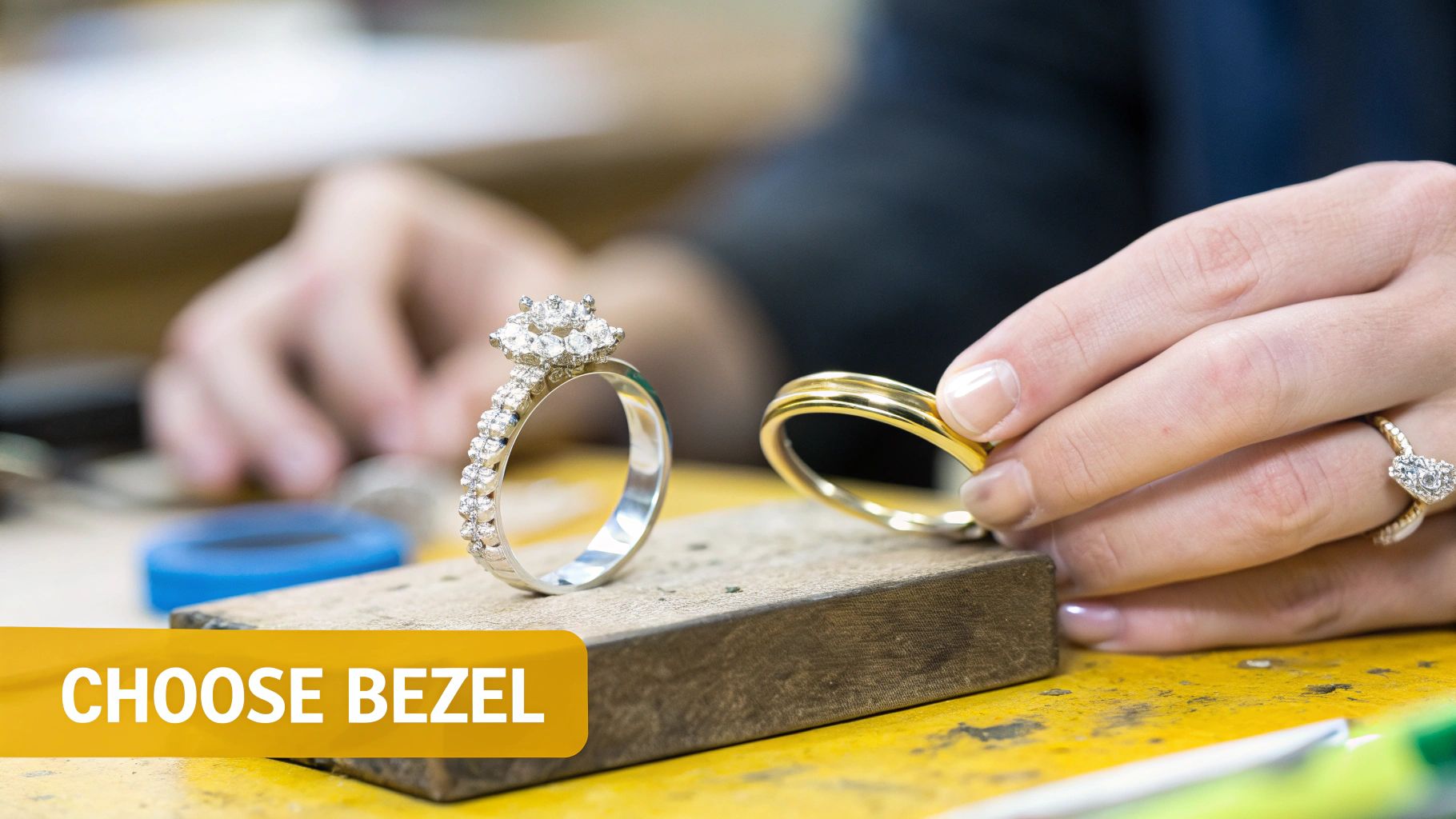
So you're drawn to the sleek, modern look of a bezel setting? You're in good company. Making the right choice is all about balancing your personal style with a few practical details. While prong settings still dominate the market, bezel settings have carved out a significant niche, accounting for around 18% of engagement rings sold in the US.
One of the first things you'll want to consider is the ring's profile, especially if it's an engagement ring you plan to pair with a wedding band. Because the solid metal collar of a full bezel often sits low against the finger, a straight wedding band might not fit snugly beside it, leaving a noticeable gap.
To get that seamless, stacked look, you'll likely need a curved or custom-fit wedding band that's specifically designed to trace the contours of your engagement ring. Many jewelers, including us at Precious Pulse Jewelry, offer matching bands designed to pair perfectly with our bezel-set engagement rings.
Inspecting Quality Craftsmanship
When you're looking at a potential piece, get up close and personal with the bezel itself. The quality of the craftsmanship is everything. A top-tier setting should have a metal rim that's smooth, even, and consistent all the way around the gemstone.
Here are the signs of excellent work to look for:
- No Gaps: The metal should hug the surface of the stone perfectly, with absolutely no visible spaces.
- Uniform Thickness: The rim's width shouldn't have any thin spots or lopsided areas; it needs to be consistent.
- Smooth Finish: Run your finger over the setting. It should feel completely polished and smooth, never rough or sharp.
A well-crafted bezel doesn’t just look better—it provides far superior security for your gemstone. Any gaps or inconsistencies can compromise the integrity of the setting over time.
For a deeper dive into the world of settings and what makes a great ring, this complete guide to buying engagement rings is a fantastic resource.
Ultimately, the most important thing is choosing a ring that feels like you. For more guidance on that, check out our guide on how to choose an engagement ring style that truly reflects who you are. Armed with this knowledge, you can confidently find a beautiful piece you'll treasure for years to come.
Got Questions About Bezel Settings? We’ve Got Answers.
To wrap things up, let’s tackle some of the most common questions people ask before choosing a bezel setting. Getting clear, straightforward answers can help you feel totally confident in your decision. From sparkle and cost to cleaning and diamond shapes, here’s everything you need to know.
Do Bezel Settings Make Diamonds Look Less Sparkly?
This is probably the number one concern we hear, and it’s a fair question. A full bezel setting does cover the sides of a diamond, which can slightly reduce the amount of light entering from the profile. Compared to a prong setting that leaves the stone almost completely exposed, you might notice a subtle difference.
However, a well-cut diamond gets the vast majority of its brilliance from the light entering through its top surface (the table). So, will it still sparkle? Absolutely. A high-quality stone will always be brilliant. For the best of both worlds, a partial bezel offers that robust security while leaving parts of the diamond open to catch even more light.
Are Bezel Settings More Expensive Than Prong Settings?
Generally, yes. Crafting a bezel setting is a more hands-on, labor-intensive process for a jeweler. It requires more precious metal and a much higher degree of skill to perfectly sculpt that metal frame to hug the gemstone securely.
That precision work naturally comes with a higher price tag than a standard prong setting. That said, most people find the extra investment is well worth it for the superior durability and the peace of mind that comes with it.
The added cost of a bezel setting reflects the higher level of craftsmanship and materials required. In return, you get a setting that is exceptionally secure and built to last a lifetime with minimal maintenance.
How Do You Clean a Bezel-Set Ring?
Here’s one of the best parts about bezel settings: they are incredibly easy to clean. You don’t have to worry about snagging a cleaning cloth on prongs or having them bend out of shape during cleaning.
Here is the most effective and safest way to clean your ring at home:
- Soak it in a bowl of warm water with a few drops of mild dish soap for about 20-30 minutes. This will help loosen any oils or grime.
- Gently scrub the gemstone and setting with a soft-bristled toothbrush. Make sure to get underneath the stone where dirt can sometimes build up.
- Rinse the ring thoroughly under clean, running water.
- Pat it dry with a soft, lint-free cloth to avoid any water spots.
What Diamond Shapes Work Best in a Bezel Setting?
Bezel settings are wonderfully versatile and look fantastic with just about every diamond shape you can imagine. Round and oval cuts are classic choices that create a sleek, modern, and almost futuristic look inside the smooth metal frame.
Even better, a bezel setting is the ultimate protector for more vulnerable fancy shapes. It offers unmatched security for the sharp corners of a princess cut or the delicate points of marquise and pear shapes, preventing chips and snags. This makes it both a stylish and incredibly practical choice.
Ready to explore the sleek security of a bezel setting for yourself? At Precious Pulse Jewelry, we offer a stunning collection of beautifully crafted rings designed for modern life. Find your perfect piece today at Precious Pulse Jewelry.