
What Is a Tennis Bracelet: Your Guide to Timeless Style
So, what is a tennis bracelet? In short, it’s a flexible bracelet made of a continuous, shimmering line of diamonds or other gemstones. Each stone is set individually into a delicate metal chain, creating what many call a 'river of light' around the wrist. The design is celebrated for being both incredibly elegant and surprisingly tough enough for daily wear.
Decoding the Classic Tennis Bracelet
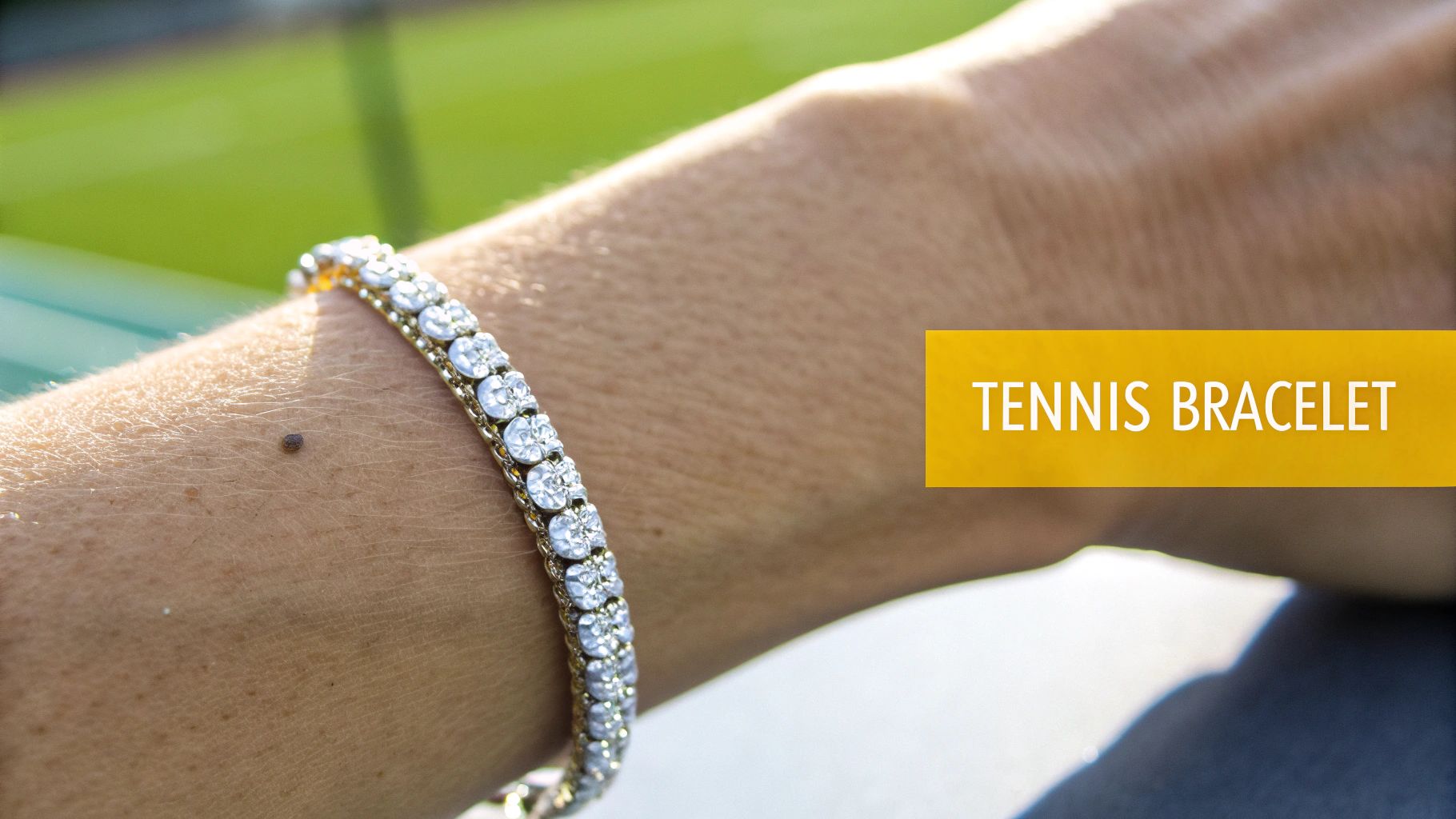
Think of a tennis bracelet as the perfect middle ground between a stiff, rigid bangle and a loose, dangling chain. Its magic lies in its construction—a series of individual links, each cradling a single stone. This structure is what allows the bracelet to move so fluidly and comfortably with your body.
Unlike so many other pieces of fine jewelry that are saved for special occasions, the tennis bracelet earned its fame by being worn during an intense athletic match. That iconic moment cemented its reputation as a piece that’s as resilient as it is beautiful.
Core Components of the Design
At its heart, the design is brilliantly simple yet demands incredible precision from the jeweler. A few key elements have to work together perfectly to create that signature, dazzling look.
- A Continuous Line of Stones: This is the hallmark of the style. The bracelet features an unbroken circle of gems—usually diamonds—that maximizes sparkle from every conceivable angle.
- Flexible Links: Each stone sits in its own linked setting. This allows the bracelet to drape gracefully over the wrist instead of sitting stiffly like other styles.
- Secure Clasp: A high-quality clasp is non-negotiable, often featuring a secondary safety latch. It’s essential for protecting the valuable stones and making sure your investment stays right where it belongs.
While the tennis bracelet is a very specific style, it’s just one of many beautiful ways to adorn your wrist. To see how it stacks up against other designs, you can explore the many various types of bracelets people wear today.
A true tennis bracelet is defined by its continuous, flexible setting. This design ensures that the stones—not the metal—are the main focus, creating an effect of pure, uninterrupted brilliance.
This iconic piece is part of a wider world of accessories. For those who appreciate its refined look, exploring other demi-fine jewelry can offer more ways to express personal style with elegant, high-quality pieces. Ultimately, its blend of comfort and glamour makes it a timeless investment.
The Unforgettable Story Behind the Name
Before it became a household name, the tennis bracelet went by a much simpler, more descriptive title: the "line" or "eternity" bracelet. So how did a piece of fine jewelry get its sporty nickname? The story hinges on one dramatic, televised moment during the 1987 U.S. Open that forever linked a diamond bracelet to the world of professional tennis.
The star of the story is American tennis legend Chris Evert. In the middle of a high-stakes match, the clasp on her diamond line bracelet gave way, sending it flying somewhere onto the court. Unwilling to continue without her beloved piece, Evert did the unthinkable—she asked the officials to pause the match.
The game came to a halt. The search was on. Millions of viewers watched, captivated, as Evert scanned the court for her missing diamonds. In that instant, the "line bracelet" was reborn. Jewelers were flooded with requests for "that tennis bracelet," and the new name stuck immediately.
A Game Changing Moment for Jewelry
This wasn't just about renaming a bracelet; it was a cultural shift. By wearing diamonds during an intense athletic competition, Chris Evert shattered the old rule that fine jewelry was only for fancy dinners and formal events. She proved that luxury could be part of an active, modern lifestyle.
This single event instantly associated the diamond line bracelet with strength, athleticism, and effortless grace, cementing its status as an iconic piece suitable for any occasion.
The incident showed the world that a simple, continuous row of diamonds could be both incredibly beautiful and surprisingly tough. Of course, the fact that the bracelet broke in the first place highlights just how critical a secure clasp is—a detail you can learn more about on Hannoushny.com and a feature we obsess over in our Precious Pulse Jewelry collection.
Ultimately, the story transformed the bracelet into a symbol of everyday elegance. It’s a reminder that you don’t need a special reason to wear something that makes you feel incredible. That perfect blend of resilience and refined style is exactly what defines the tennis bracelet today.
How the Design Evolved Through History
Long before it ever saw a tennis court, the bracelet we know and love today was already a fixture in high fashion. Its story really kicks off in the glamorous Art Deco era of the 1920s, where it was known as a “line bracelet” or “eternity bracelet.” That name perfectly captured its essence—an endless, shimmering circle of stones.
Jewelers of the time were mastering new, precise techniques, and the line bracelet was their ultimate showcase. They set individual, often square-cut, diamonds into tight, symmetrical rows, creating an uninterrupted band of pure brilliance. It was a clean break from the ornate, heavy jewelry of past eras and perfectly mirrored the sleek, geometric vibe of Art Deco design.
The Rise to Modern Popularity
While the line bracelet was a staple for decades, its popularity truly exploded in the 1970s and 80s. The design’s simple elegance was a perfect match for the era's blend of high fashion and casual luxury. It became the go-to accessory for women who wanted a touch of glamour that could move seamlessly with them from day to night.
This growing appreciation set the stage for its iconic renaming after the Chris Evert incident in 1987. The new name cemented its status in pop culture, but the core design has remained remarkably consistent for nearly a century.
The genius of the original design is its timelessness. Whether it was crafted in the 1920s or today, the bracelet’s core appeal—a flexible, unbroken line of sparkle—remains completely unchanged.
Early designs from the 1920s sometimes featured playful details called 'service stripes,' a subtle nod to the military decorations of the time. Those early bracelets were meticulously crafted, with square-cut stones set incredibly close together to maximize their fire and brilliance. You can dive deeper into these historical designs and their origins on The Vault Jewelers.
Today, modern craftsmanship has introduced endless variations. You can find tennis bracelets with different gems, unique metal settings, and innovative new cuts. At Precious Pulse Jewelry, we honor this history while offering contemporary designs that suit a modern lifestyle, ensuring every piece feels both classic and fresh.
How to Choose Your Perfect Tennis Bracelet
Picking out a tennis bracelet is a deeply personal journey, a balance between brilliant aesthetics and everyday practicality. Knowing what to look for transforms the experience into an exciting hunt for a piece you'll treasure forever. The goal is to find that sweet spot where great design meets durable construction—an accessory that feels just right, whether you're at a black-tie event or running errands.
First, let's talk gemstones. While diamonds are the classic choice, many modern tennis bracelets at Precious Pulse Jewelry feature high-quality diamond alternatives like moissanite, which offers exceptional sparkle at a more accessible price point. When evaluating stones, the "4 Cs" still apply: Cut, Color, Clarity, and Carat.
- Cut: This is arguably the most important factor. A well-cut stone acts like a tiny mirror, reflecting light back with incredible sparkle. The cut is what gives the bracelet its signature fiery brilliance, regardless of the gemstone.
- Color: For a bright, icy look, aim for stones in the G-J range for diamonds, or their colorless/near-colorless equivalents in other gems. They offer fantastic value without any noticeable color to the naked eye.
- Clarity: This refers to natural imperfections. Because the stones in a tennis bracelet are relatively small, you don't need a flawless grade. A clarity like SI (Slightly Included) or VS (Very Slightly Included) is often "eye-clean" and provides excellent value.
- Carat: This refers to the total weight of all the stones combined. A higher carat weight means bigger stones and a bolder look, but don't overlook bracelets with smaller stones! A piece with smaller, exceptionally well-cut diamonds can outshine one with larger, duller stones any day.
The infographic below gives a great visual of how this timeless design has stayed relevant through different fashion eras, proving its staying power.
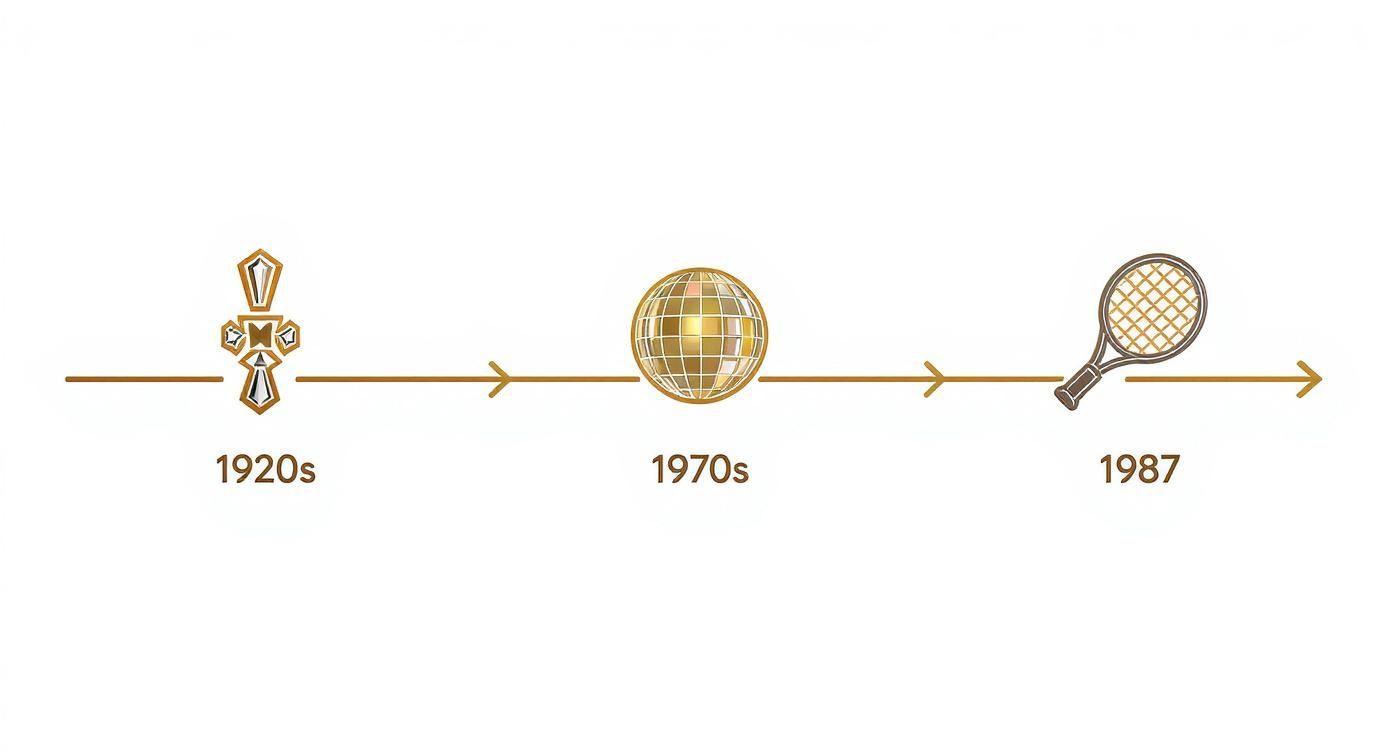
From its Art Deco origins in the 1920s to its celebrity-fueled fame in 1987, the tennis bracelet has proven it's here to stay.
Selecting Your Metal and Setting
Beyond the sparkle, the metal and setting are the unsung heroes of your bracelet. They dictate the overall look, feel, and—most importantly—how well it holds up to daily life.
Yellow gold lends a classic, warm vibe, while white gold and platinum offer a cool, contemporary feel. Platinum is the toughest of the bunch, but it's also the priciest. If you want to dive deeper, our guide on the best metal for jewelry breaks down all the pros and cons.
The setting holds the stones in place and defines the bracelet’s personality.
A prong setting is the most popular choice for a reason—it uses tiny metal claws to hold each diamond, letting the maximum amount of light in for unbelievable sparkle. For those with a more active lifestyle, bezel and channel settings wrap more metal around the stones, offering extra security and a sleeker profile.
Last but not least, always check the clasp. A flimsy clasp is a recipe for heartbreak. Look for a sturdy box clasp, preferably with a double safety latch, to ensure your beautiful investment stays right where it belongs: on your wrist.
By keeping the 4 Cs, metal, setting, and clasp in mind, you’ll be perfectly equipped to find a tennis bracelet that's not only stunning but also built to last.
Styling Your Bracelet for Any Occasion
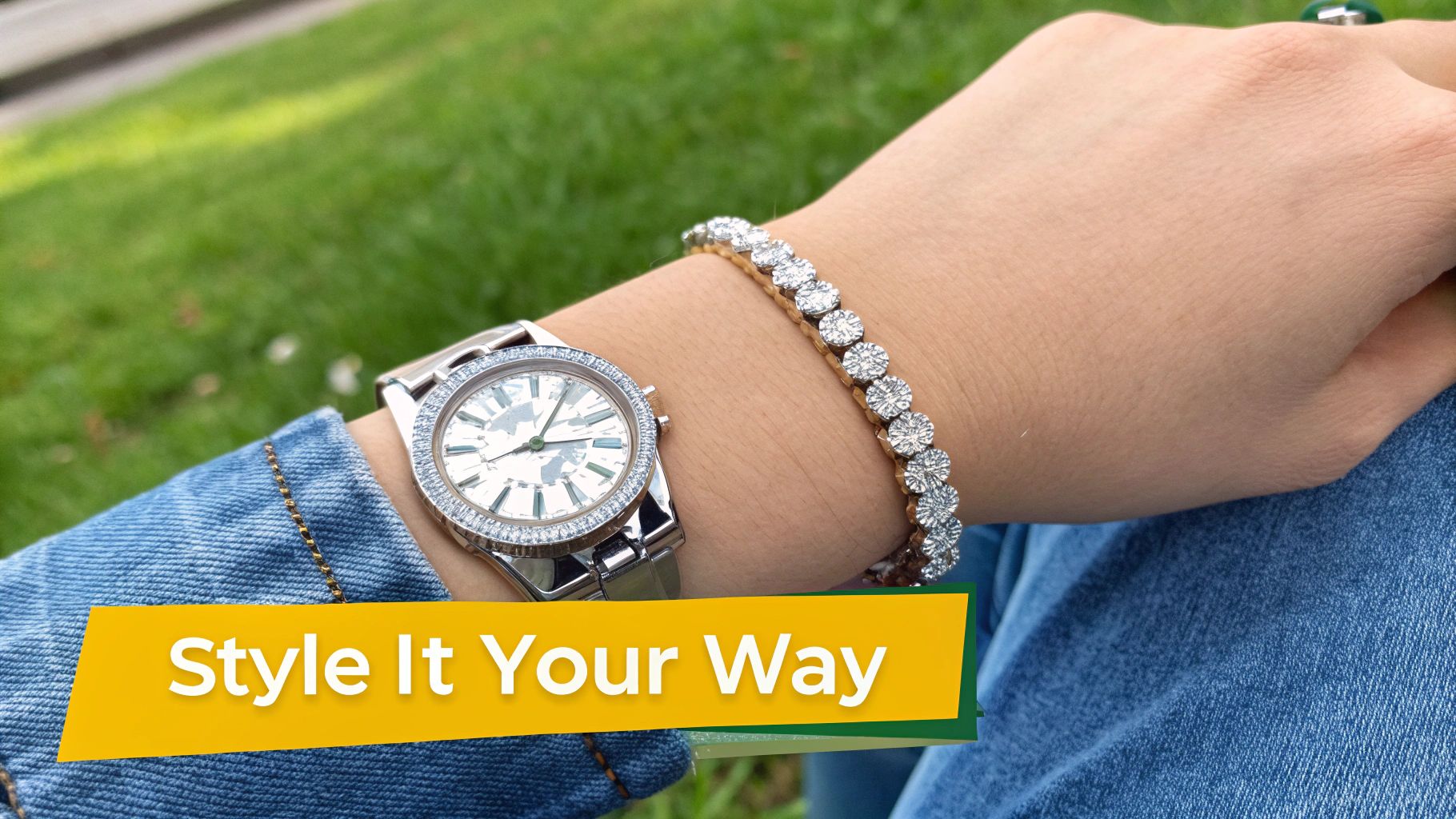
The real magic of a tennis bracelet is its versatility. This is one of those rare pieces that genuinely moves from casual daytime chic to sophisticated evening glamour without missing a beat, making it one of the hardest-working items in any jewelry box. It's not just an accessory; it’s a style chameleon.
For a relaxed, everyday vibe, just let the bracelet shine on its own. Picture it with a simple white t-shirt and your favorite jeans—it adds an unexpected pop of luxury that feels both effortless and intentional. This minimalist approach lets the bracelet's sparkle do all the talking.
But when it's time to dress up for a formal event or a special dinner, the tennis bracelet is the perfect finishing touch. It beautifully complements a cocktail dress or evening gown without ever overpowering it, delivering pure, understated elegance.
How to Stack and Layer
Stacking is where you can truly personalize your look. The trick is to combine your tennis bracelet with other pieces to create a style that feels curated and personal, not cluttered.
Here are a couple of practical styling tips:
- With a Watch: This is a classic power pairing. Place your tennis bracelet right next to your watch on the same wrist for a chic, stacked look. If your watch has a large face, a more delicate tennis bracelet creates a beautiful, balanced contrast. Sticking to matching metals—like a gold watch with a gold bracelet—keeps the look cohesive and polished.
- With Other Bracelets: Don't be afraid to mix textures and styles. Pair the brilliant sparkle of your tennis bracelet with a simple gold bangle or even a beaded bracelet for a more bohemian, layered aesthetic. The key is to balance the shine with more subdued textures.
The ultimate style tip? Wear it with confidence. Whether it’s flying solo as a whisper of sparkle or stacked boldly with your favorite watch, the tennis bracelet adapts to your personal style, not the other way around.
And if you love the elegant, continuous sparkle of this design, you're in luck. This same principle translates beautifully to other classic pieces. You can explore a guide to diamond tennis necklaces to see how this timeless look works in another form.
Got Questions? We’ve Got Answers
Even a piece as timeless as a tennis bracelet can bring up a few practical questions. It's an investment in your style, after all, and knowing the ins and outs will help you wear it with total confidence for years to come. Here’s a rundown of the most common things people ask.
Can You Really Wear a Tennis Bracelet Every Day?
Yes, absolutely! The tennis bracelet earned its fame by holding up under the pressure of a professional tennis match with Chris Evert. It’s not just for special occasions; it was practically born for daily wear. That said, to keep it looking its best, it’s a good idea to take it off for certain activities—think swimming in a chlorinated pool, heavy-duty gardening, or contact sports where it might get snagged. A secure clasp, like the ones featured on Precious Pulse Jewelry pieces, is your best friend for confident, everyday wear.
How Do I Find the Right Bracelet Size?
Getting the fit right is key to both comfort and security. You want it loose enough to move gracefully but not so loose that it could slide off.
The classic rule of thumb is this: you should be able to comfortably slip one finger between the bracelet and your wrist. This gives you that perfect balance of movement and security.
To measure at home, wrap a flexible measuring tape around your wrist where you plan to wear the bracelet. Add about a half-inch to one inch (or 1-2 cm) to that measurement to find your ideal bracelet size. This little bit of extra room ensures it drapes beautifully without being too tight.
What Is the Best Way to Clean a Tennis Bracelet?
Keeping your bracelet sparkling is much easier than you’d think. A simple at-home cleaning will do wonders.
Just follow these quick steps:
- Soak it: Fill a small bowl with warm water and add a few drops of mild dish soap. Let your bracelet soak for about 20-30 minutes to loosen up any dirt and oils.
- Gently scrub: Use a very soft toothbrush (a baby toothbrush works perfectly) to carefully clean around the gemstones and in between the links where grime can build up.
- Rinse and dry: Run the bracelet under clean, cool water to rinse it thoroughly. Then, pat it dry with a soft, lint-free cloth.
For extra care, it's a great idea to have a jeweler professionally inspect it about once a year. They'll give it a deep clean and check that all the settings and the clasp are still tight and secure.
Ready to find a piece that blends timeless style with everyday elegance? Explore the stunning and affordable collection at Precious Pulse Jewelry and discover the bracelet that feels like it was made just for you. Find your next favorite accessory at https://preciouspulsejewelry.com.