
Understanding the Average Engagement Ring Cost
When you first start shopping for an engagement ring, it’s easy to get fixated on one big number: the average cost. Right now, that figure hovers between $5,200 and $6,504 in the U.S. While that gives you a ballpark idea, it definitely doesn't tell the whole story.
Think of that number as a starting point, not a rule you have to follow. It’s simply a signpost on your journey to finding the perfect ring that feels right for you and your budget.
What Is the Real Average Engagement Ring Cost?
The "average" price of an engagement ring is a fascinating moving target. It shifts with everything from the global economy to our changing ideas about what a proposal even means. So, what is the real average cost? It's a snapshot in time showing what thousands of other couples are spending, but it shouldn't define what you spend.
A single average can be misleading because it lumps together a huge range of purchases. It includes everything from a simple, elegant solitaire to an extravagant, multi-carat showstopper. Just like the average cost of a car blends budget-friendly sedans with high-end sports cars, the average ring cost throws everything into one pot.
Why Averages Fluctuate
The number you see today isn't what it was a few years ago, and it'll be different a few years from now. Several key things are always pushing and pulling on that average:
- Economic Trends: When the economy is strong and people feel confident, spending on luxury items like engagement rings tends to go up. But during uncertain times, couples naturally tighten their budgets.
- Shifting Tastes: Modern couples are exploring so many different styles. The rise of lab-grown diamonds, unique gemstones, and vintage rings has opened up more affordable and personalized options, which pulls the overall average down.
- Generational Values: Younger buyers, especially Millennials and Gen Z, often care more about sustainability, ethical sourcing, and financial smarts than old-school traditions. This also changes what people are willing to spend.
A Look at the Current Numbers
To get a clearer picture, it’s helpful to see what reliable industry sources are reporting. Let's look at some recent data to understand where the current average stands.
A few different studies and reports give us a solid window into current spending habits.
| US Average Engagement Ring Cost at a Glance |
| :--- | :--- |
| Data Source | Reported Average Cost |
| A major wedding industry study | $5,200 |
| An analysis of insurance appraisals | $6,504 |
These numbers show that the average price for an engagement ring in the U.S. is currently between approximately $5,200 and $6,504. This actually marks a downward trend from a recent peak of over $9,000, which was fueled by unique post-pandemic spending surges. For a deeper dive, you can explore the full report on recent ring costs and see the trends for yourself.
The most important takeaway is that the "average cost" is a guide, not a goal. The perfect ring is one that symbolizes your commitment and fits comfortably within your personal financial landscape.
Ultimately, the best budget is the one you create based on your own circumstances. Whether you choose a classic solitaire from our collection or a completely custom-designed piece, the true value is in the meaning behind it. The goal isn't to hit a national average; it's to find a beautiful symbol of your love that you can both cherish for a lifetime without any financial stress.
How the Four Cs Dictate Diamond Prices
The diamond is almost always the single most expensive part of an engagement ring. But what makes two seemingly identical one-carat diamonds have wildly different costs? The answer is the universal standard for grading diamonds: the Four Cs.
That’s Cut, Color, Clarity, and Carat weight.
Getting a handle on these four factors is your key to mastering the budget for an engagement ring. It lets you decide where to put your money for the biggest visual impact and where you can cleverly save without sacrificing beauty. Think of them as a set of levers you can pull to find that perfect balance of size, sparkle, and price.
As you start weighing these factors, it helps to see what other couples are actually spending. This infographic pulls together recent data from a few key industry sources.
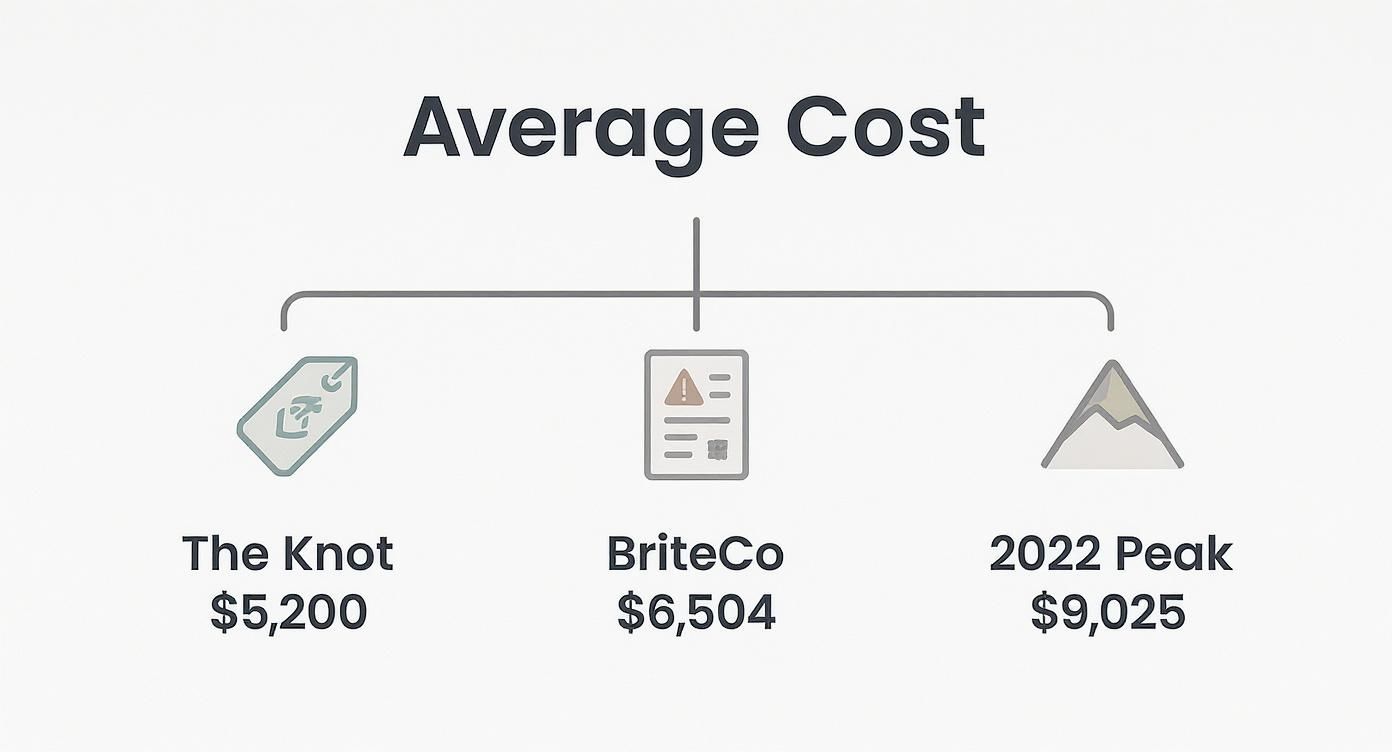
As you can see, the "average" cost is all over the place, ranging from around $5,200 to over $9,000 in recent years. This just goes to show there’s no single right number to spend. It’s all about finding what’s right for you.
The 4 Cs are not just industry jargon; they are practical tools that help you prioritize what matters most to you in a diamond. The table below breaks down how focusing on different ends of the spectrum for each "C" can dramatically shift the final price of a one-carat stone.
How the 4 Cs Impact Your Ring's Cost
| The 'C' | Budget-Friendly Choice (Example) | Premium Choice (Example) | Potential Cost Impact |
|---|---|---|---|
| Carat | A 0.90-carat diamond that looks nearly identical to a full carat. | A full 1.00-carat diamond, hitting that magic number. | High |
| Cut | A "Good" cut grade, which may lack some brilliance. | An "Excellent" cut, maximizing sparkle and fire. | Very High |
| Color | A "J" color grade (nearly colorless), perfect for yellow gold settings. | A "D" color grade (perfectly colorless), the rarest and iciest white. | Very High |
| Clarity | An "SI1" (Slightly Included) stone that is "eye-clean." | An "FL" (Flawless) stone with no imperfections under 10x magnification. | High |
This shows that you don't have to max out every category to get a stunning diamond. A smart trade-off in one area, like choosing an eye-clean SI1 clarity stone, can free up your budget for a factor that creates more visual pop, like an Excellent cut.
Carat: The Misunderstood Measure of Size
Most people hear Carat and think "size," but it’s actually a measure of weight. A higher carat weight usually means a physically larger stone, but the price jumps exponentially. This is where you can find incredible value. Practical Advice: A 0.90-carat diamond can look almost indistinguishable from a 1.00-carat stone but come with a significantly smaller price tag. This "shopping shy" of the full carat mark is one of the best ways to get more for your money.
Cut: The Source of Sparkle
While carat gets all the attention, gemologists will tell you that Cut is the most important "C" when it comes to a diamond's beauty. It refers to how well a diamond’s facets interact with light. A masterfully cut diamond is like a tiny, perfect disco ball, grabbing every bit of light and shooting it back out as breathtaking sparkle and fire. An excellent cut can even make a diamond look bigger and help hide small inclusions.
Practical Advice: Never compromise on the Cut. An "Excellent" or "Very Good" cut grade is the best investment you can make for visual impact. It guarantees your diamond will sparkle to its fullest potential, making a lower-color or clarity stone look more brilliant.
Color: The Absence of Tint
When it comes to diamonds, the less color, the higher the grade. The GIA (Gemological Institute of America) grades diamond Color on a scale from D (colorless) to Z (light yellow). Practical Advice: The difference between a "colorless" stone (D-F) and a "nearly colorless" one (G-J) is often invisible to the naked eye. This is a fantastic area to save money. For even more savings, if you're choosing a yellow or rose gold setting, you can comfortably drop to a J or K color grade, as the warm metal will mask any faint yellow tint in the diamond.
Clarity: The Measure of Purity
Clarity is all about a diamond's tiny imperfections, called inclusions. The scale runs from Flawless (FL) to Included (I). Practical Advice: The goal isn't to find a flawless diamond; it's to find an "eye-clean" one—a stone where no inclusions are visible without magnification. Many diamonds in the VS (Very Slightly Included) and even the SI (Slightly Included) ranges fit this description perfectly. There’s no need to pay the huge premium for a Flawless diamond when a less expensive, eye-clean stone from a collection like ours at Precious Pulse Jewelry will look just as perfect once it’s set.
Why Metals and Settings Also Shape the Final Cost
While the diamond is the star, the band and setting dramatically influence the average engagement ring cost. They provide the foundation, security, and style that turn a beautiful stone into your cherished piece of jewelry. The metal you select determines not just the ring's color but also its long-term durability, while the setting defines the ring's entire personality.
Choosing Your Precious Metal
The metal band's price can swing wildly based on rarity and density. Knowing the differences is key to making a choice that fits your partner's style and your wallet.
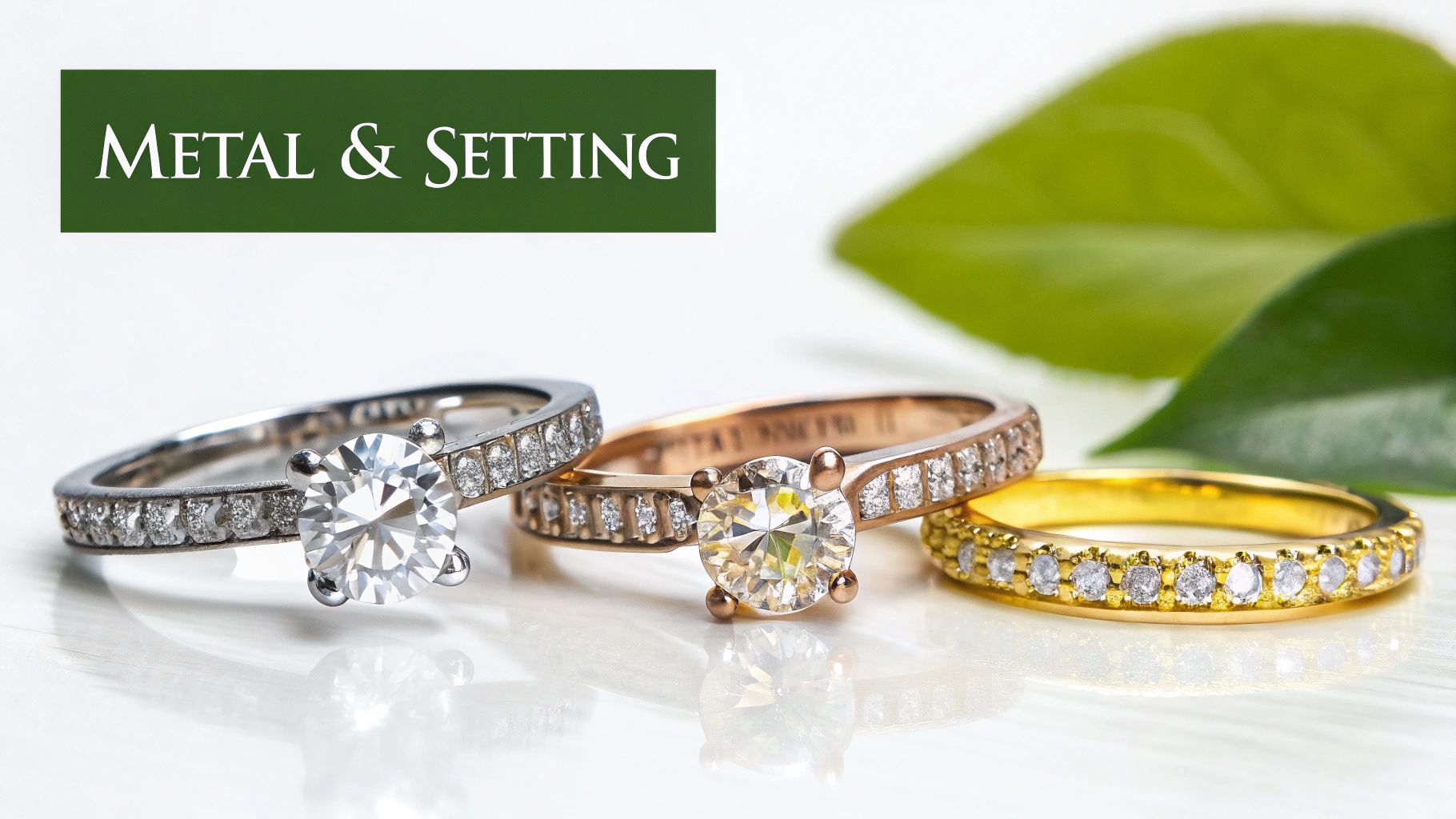
- Platinum: The premium choice. It's naturally white, incredibly dense, and hypoallergenic. Its rarity and density also make it the most expensive option.
- White Gold: A popular, affordable alternative to platinum. It's yellow gold mixed with white metals and plated in rhodium. Practical Advice: It offers the platinum look for less but will need re-plating every few years to maintain its bright white finish, which is a small future maintenance cost to consider.
- Yellow Gold: The timeless classic. It provides a warm hue that beautifully complements diamonds with slightly lower color grades (a great budget-savvy tip!).
- Rose Gold: This romantic, pink-hued metal is trendy and surprisingly durable. Its unique color makes it a stylish choice that is often priced similarly to yellow gold.
Practical Advice: Consider your partner's daily activities. If they have an active lifestyle or work with their hands, a durable metal like platinum or 14k gold might be a worthwhile long-term investment over a softer metal like 18k gold.
How Setting Styles Impact Price
The setting is where craftsmanship and complexity really impact the price. A setting can make a diamond appear larger or add extra sparkle, but the labor and additional small diamonds can cause costs to fluctuate dramatically.
- Solitaire: The quintessential, most budget-friendly setting. A single diamond held by simple prongs puts all the focus on the center stone. Our simple solitaire settings are a perfect way to maximize your budget toward a beautiful center stone.
- Pavé: Features tiny diamonds set closely together along the band, creating a surface of sparkle. This look is stunning, but the cost of the small diamonds and the intricate labor can add $500 to $2,000 or more to the price.
- Halo: Encircles the center stone with a ring of smaller pavé diamonds. This creates the illusion of a much larger center diamond. That "wow" factor comes at a cost, making halo settings one of the more expensive options. Practical Advice: A halo can make a 0.75-carat diamond look like a full carat, which can be a cost-effective way to achieve a larger look.
At Precious Pulse, we offer a wide range of settings. Whether you're looking for an elegant solitaire or a dazzling halo, we can help you find the perfect style to match your vision and budget.
How Modern Trends Are Changing Ring Budgets
The old "rules" of buying an engagement ring are fading fast. Today’s couples are rewriting the script, putting their personal values, sustainability, and financial smarts ahead of outdated traditions. This new mindset opens up a world of stunning options that don’t require you to break the bank.
This shift is being led by a new generation of buyers who value ethical sourcing and smart spending. This has fueled a massive demand for lab-grown diamonds, which can cost a whopping 40–60% less than their mined counterparts.
The Rise of Lab-Grown Diamonds
One of the biggest game-changers is the lab-grown diamond. These are real diamonds, identical in every way—chemically and optically—to those from the Earth. The only difference is their origin. Practical Advice: Choosing a lab-grown diamond means you can get a much larger and higher-quality stone for your budget without sacrificing an ounce of sparkle or durability. It's the single most effective way to lower the cost of your engagement ring while maximizing its visual impact.
Beyond the Diamond: Unique Gemstones and Vintage Finds
Another exciting trend is the move away from the traditional, diamond-only ring. Modern couples are embracing colored gemstones like sapphires, emeralds, and morganite, which offer a unique splash of personality and are often far more affordable. At the same time, there's a growing appreciation for the charm and sustainability of vintage rings.
- Unique Character: Each vintage piece tells a story with its one-of-a-kind craftsmanship.
- Eco-Friendly: Choosing a pre-owned ring is the ultimate form of recycling, requiring no new mining.
- Incredible Value: You can often find exquisite, handcrafted rings at a fraction of the cost of a comparable new piece.
The modern approach to engagement is about alignment—finding a ring that reflects your shared values, personal style, and financial goals. You don’t have to follow tradition to find a breathtaking symbol of your commitment.
Beyond the ring itself, modern couples often consider the broader aspects of engagement, which can include various experiences and associated costs influenced by current trends. Ultimately, these new options empower you to define what's truly valuable.
Setting a Realistic Engagement Ring Budget
Alright, you know what drives the average engagement ring cost. Now it’s time to plan. Setting a budget is the most empowering step you’ll take, allowing you to choose a stunning ring that symbolizes your future—without kicking it off with financial stress.
First, let's officially toss out those old, arbitrary rules like the "three-month salary rule." It was a brilliant marketing slogan, but it has no place in modern financial planning. Your budget should be about your reality, not an outdated ad campaign.
Starting the Conversation
Before you even glance at a single ring, the most critical step is to have an open, honest talk with your partner. This is a huge milestone, and getting on the same page financially is one of the healthiest things you can do for your future together. Discuss what you both truly value in a ring. Is it the size of the stone? The sparkle from a high-quality cut? Or a unique, intricate setting? Nailing down these priorities will be your North Star.
A Practical Approach to Your Budget
A realistic budget is one that fits your personal financial picture. It's about feeling confident and comfortable with the final purchase. Here’s a sensible way to figure it out:
- Assess Your Finances: Take an honest look at your income, savings, and monthly expenses. Figure out what you can comfortably afford without raiding your emergency fund or taking on high-interest debt.
- Consider Financing Options: Many jewelers, including Precious Pulse Jewelry, offer financing plans that can make the purchase more manageable. Just be sure to read the fine print to understand the interest rates and payment terms.
- Shop Smart: Keep an eye out for sales, especially around holidays. Buying during an off-peak season can sometimes land you serious savings.
A truly meaningful ring is one that reflects your love and commitment, not the size of its price tag. The best budget is one that allows you to celebrate this moment without compromising your shared financial goals for the future.
Don't Forget the Hidden Costs
The sticker price is rarely the final price. To build a truly realistic budget, you must factor in these extra expenses:
- Sales Tax: This can add a significant percentage to the total cost, depending on where you live.
- Ring Insurance: Protecting your investment is non-negotiable. Insurance typically costs 1-2% of the ring's value each year.
- Resizing and Maintenance: While some jewelers offer a complimentary first resizing, future adjustments and professional cleanings can be extra.
Remember, the engagement ring is just one piece of a larger puzzle. Many couples are juggling other major wedding expenses, like planning for florals with a wedding flower budget calculator. By planning for these extras, you create a complete budget with no nasty surprises.
Common Questions About Engagement Ring Costs
Even after you've crunched the numbers, a few lingering questions always pop up. It’s a big decision, and feeling confident means getting straight answers. Let’s tackle some of the most common ones.
How Much Can I Really Save with a Lab-Grown Diamond?
You can save a significant amount. On average, you can expect to pay 40-60% less for a lab-grown diamond than a natural one of the exact same size and quality. For a one-carat stone, that simple switch can mean thousands of dollars back in your pocket. This allows you to invest in a better cut, a more intricate setting from our collection, or simply enjoy the savings without sacrificing an ounce of the stone’s beauty.
Is It Okay to Spend Less Than the National Average?
Absolutely, yes. The national average is just a statistic—a mix of wildly different budgets. It is not a rule you need to hit. The right amount to spend is whatever feels comfortable for your financial situation and true to your values as a couple. A meaningful ring isn’t defined by its price tag; it's defined by the commitment it represents.
What Are the Hidden Costs of Buying an Engagement Ring?
The sticker price isn’t always the final price. To create a realistic budget, you need to factor in a few extra expenses that often get overlooked.
- Sales Tax: This can add a significant percentage to the total cost, depending on where you live.
- Ring Insurance: This is a must-have to protect your investment. It typically costs 1-2% of the ring's appraised value per year.
- Resizing and Maintenance: While an initial resizing might be complimentary, future adjustments or professional cleanings can add up down the road.
Finding a ring that honors both your love and your budget is the ultimate goal. At Precious Pulse Jewelry, we specialize in beautiful, high-quality engagement rings that offer incredible value. Explore our stunning collection and find the perfect symbol of your future together at https://preciouspulsejewelry.com.